01Dog Beaches in Biograd na Moru
Biograd has one official dog beach: a small cove not far from Hotel Ilirija, on the Ilirija peninsula side of town. It is a modest spot with limited space. Check for the dog sign on arrival, because municipal arrangements change from season to season. The town has no large, equipped dog beach with showers or an agility area.
Two better options are within a short drive:
- Iza banja, Sveti Filip i Jakov
- (about 5 km north): the municipal dog beach is at the third beach peninsula heading towards Biograd, between the Artić and Miluška areas.
- Pakoštane
- (south-east of Biograd): it has designated dog beach sections.
Camping Soline has dog showers in some sanitary blocks but no dog beach inside the camp. Its pet beach is about 300 m from the main camp beach, and washing dogs on the camp beach is not allowed.
02Are Dogs Allowed on Other Beaches?
Croatian rules work on a simple principle: dogs are banned on managed, signposted public beaches unless a dog section is marked. This covers the Blue Flag beaches in town, such as Dražica and the main promenade beaches.
Outside the managed beaches, the picture is looser. Rocky and pine-shaded stretches outside the town centre are widely used by dog owners, and Bošana, a short drive from the centre, has no dog ban according to local visitors. Treat any unsigned beach as "tolerated, not guaranteed". Keep the dog on a lead, collect waste and leave if a sign or a staff member says otherwise.
03Old Town, Promenade and Restaurants
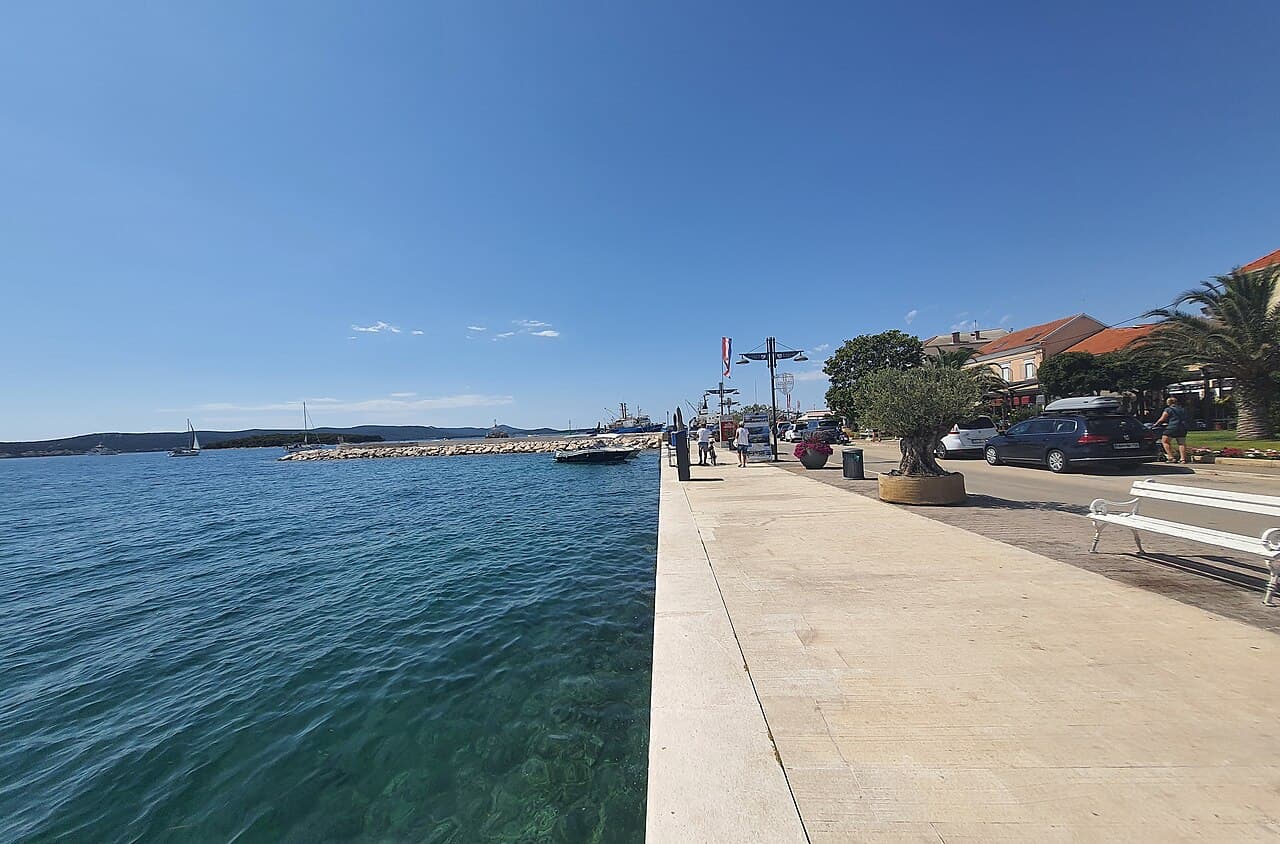
Biograd is flat, and the seafront promenade and marina area suit a dog on a lead. Croatian rules expect dogs to be leashed in public, and the Croatian entry rules mention a muzzle. In practice, muzzles are enforced only for breeds on the restricted list.
Restaurants and cafés in Croatia decide their own policy. Terraces are usually fine for a well-behaved dog on a lead. Indoor dining often is not, and food shops and bakeries generally refuse dogs. Ask before sitting down, and bring a collapsible water bowl, because paving gets very hot in July and August.
Opinion: the promenade is the real strength of Biograd for dog owners. The single official dog cove is the weakest part of the offer, so plan beach days around Sveti Filip i Jakov or a quiet shaded cove instead of relying on it.
04National Parks and Nature Parks
Rules differ for each protected area, and some ban dogs completely. Plitvice Lakes admits leashed dogs only. Kornati National Park excursions depart from the Biograd area, but park rules and the boat operator decide whether a dog can come along, so ask when booking. Vrana Lake Nature Park, close to Biograd, and the Zadar and Šibenik day-trip towns are easier options with a leashed dog. Always check the park website before driving.
05Ferries and Catamarans
The car ferry from Biograd to Tkon on Pašman is the simplest option: dogs generally travel on the car deck or the outside decks on a lead. On Jadrolinija ferries, pets are normally carried, and larger dogs should be muzzled and leashed. Catamarans and excursion boats are less predictable. Some operators accept dogs, some refuse them, and some charge a small fee. Confirm with the operator when booking, not at the quay.
06Accommodation Costs for a Dog
- Apartments
- many hosts in Biograd accept dogs, typically charging €5–15 per night, sometimes a flat cleaning fee instead.
- Campsites and mobile homes
- one mobile home near Soline charges €10 per day per dog. Camping Soline allows dogs on all pitches and in all mobile homes.
- Hotels
- Hotel Ilirija, Hotel Adriatic and Hotel Kornati appear on pet-friendly lists, but fees and size limits vary. Ask before booking.
Book early for July and August, because pet-friendly units fill first. Many hosts cap the number of dogs at one or two.
07Summer Heat and Best Months
July and August bring daytime temperatures of 30°C or more, and asphalt and stone get hot enough to burn paws. Walk before 8:00 or after 19:00 and never leave a dog in a parked car. The best months are May, June and September: the sea is warm enough for swimming, the heat is manageable and beach rules are less crowded. April and October suit long walks, though the sea is cool.
08Vet Basics
Biograd has local daytime veterinary care. The nearest 24-hour emergency options are in Zadar, about 30 km away, which is roughly 30 minutes by car. Save a Zadar clinic number before travelling. Ticks and sandflies are active in the warmer months, so use tick prevention and check the dog after pine-forest walks. Ask your own vet about leishmaniasis prevention for coastal Dalmatia.
09EU Pet Passport Rules for Driving In
- Microchip: ISO 11784/11785, implanted before the rabies vaccination. Croatia requires a chip for all dogs.
- Rabies vaccination: given at 12 weeks or older, with at least 21 days between a first vaccination and travel. Boosters within the validity period need no new wait.
- EU pet passport: issued by an authorised vet. In Croatia, the passport costs €10.06 plus VAT, and rabies vaccination with registration costs about €25 plus VAT.
Croatia does not require tapeworm treatment. Great Britain–issued passports are no longer accepted for entry into the EU, so UK travellers need an animal health certificate. Spot checks can happen even on internal EU crossings, so keep the passport within reach. Croatia has no vignette for motorways. It uses ticket-and-barrier tolls. If you drive through Austria, you need an Austrian vignette (€9.60 for 1 day, €12.80 for 10 days).
10Verdict: How Dog-Friendly Is Biograd na Moru?
Biograd na Moru scores about 3.5 out of 5. It works well for owners who want a flat town, shaded walks, easy day trips to Pašman, Vrana Lake and Zadar, and a wide choice of pet-friendly apartments and campsites. It is weak for owners who need a large, well-equipped dog beach in town itself. Choose it if you have a car and are happy to use Sveti Filip i Jakov or Pakoštane for swimming days.