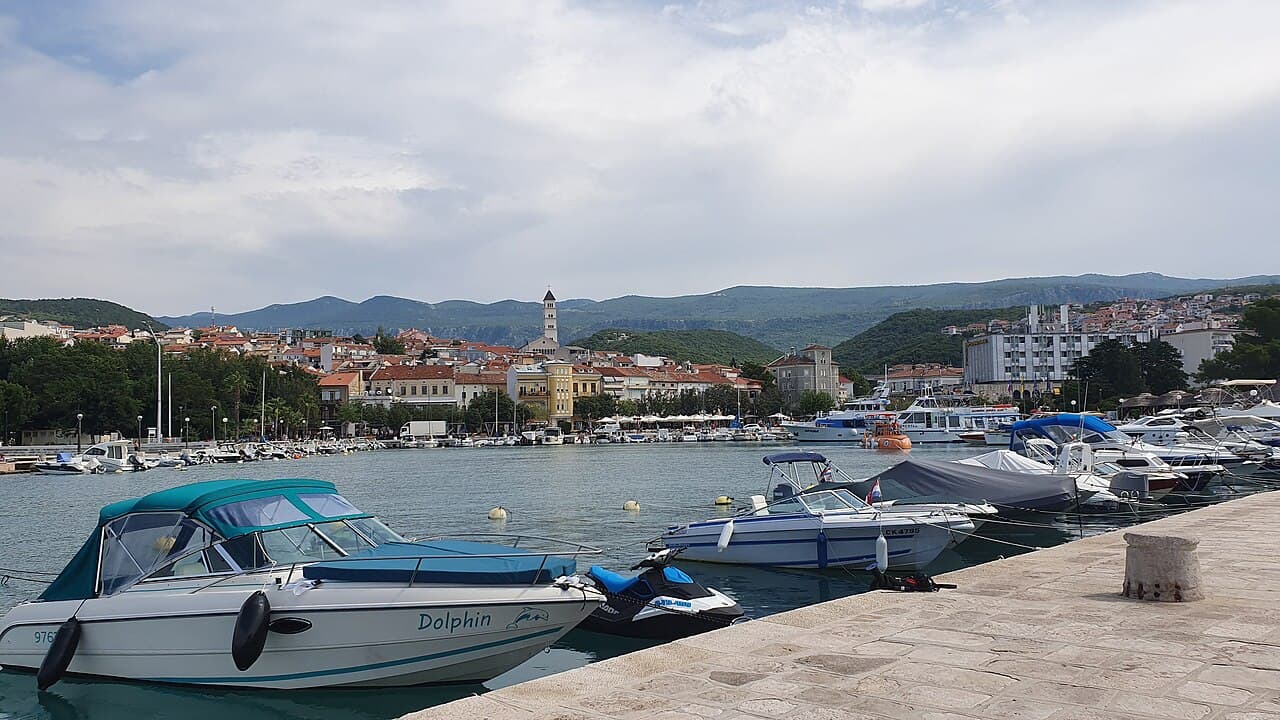
Crikvenica is located on the mainland coast of the Kvarner Gulf, exactly 165 kilometers from Croatia's capital, Zagreb. The Istrian peninsula sits further west, requiring a 250-kilometer drive from Zagreb to reach major coastal hubs like Rovinj or Pula. Comparing these two regions reveals distinct differences in travel logistics, beach geography, pricing structures, and daily vacation routines.
01Travel Logistics and Accessibility
The drive from Zagreb to Crikvenica takes approximately 1 hour and 50 minutes via the A6 motorway. Highway tolls for this route cost €9.20 each way. Because Crikvenica is located on the mainland, visitors bypass the seasonal traffic bottlenecks that often occur at the Učka Tunnel, the primary entry point into the Istrian peninsula.
Reaching Istria requires more travel time and higher costs. Driving from Zagreb to Rovinj or Poreč takes nearly 3 hours, with highway tolls ranging from €14 to €16. For international arrivals flying into Zagreb Airport (ZAG), Crikvenica serves as a much faster coastal transfer. Visitors flying into Pula Airport (PUY) will find Istrian destinations highly accessible, as Pula is situated at the southern tip of the peninsula.
Relying on the regional bus network to explore Istria's interior towns sounds convenient, but in practice, it often causes problems due to sparse timetables and long transfer times. Istria functions best as a driving destination where a rental car is required to navigate between coastal cities and inland hill towns like Motovun or Grožnjan. Crikvenica, conversely, operates as a centralized resort town. Once parked in Crikvenica, visitors can rely entirely on walking or local bicycles to navigate the immediate 8-kilometer coastal stretch connecting Crikvenica to neighboring Selce and Dramalj.
02Accommodation Costs and Options
Pricing for lodging differs significantly between the two areas. Crikvenica operates as a traditional, high-volume summer resort catering heavily to domestic visitors, as well as tourists from Germany, Austria, and Hungary. In July and August, standard double rooms in four-star hotels like Hotel Kvarner Palace or Boutique Hotel Esplanade range from €140 to €190 per night. Private apartments (apartmani) in Crikvenica average €80 to €110 per night during peak season.
Istria has positioned itself as an upscale market over the past decade. Four-star hotels in Rovinj, Poreč, or Bale frequently price between €220 and €350 per night in mid-summer. Luxury five-star properties, such as the Grand Park Hotel in Rovinj or Meneghetti Wine Hotel in Bale, command rates exceeding €450 to €600 per night. Private apartments in central Istrian coastal towns average €130 to €180 per night. For travelers strictly monitoring a budget, Crikvenica provides a coastal experience at approximately 30% to 40% less cost than Istria's top-tier destinations.
03Beach Infrastructure: Sand vs. Rock
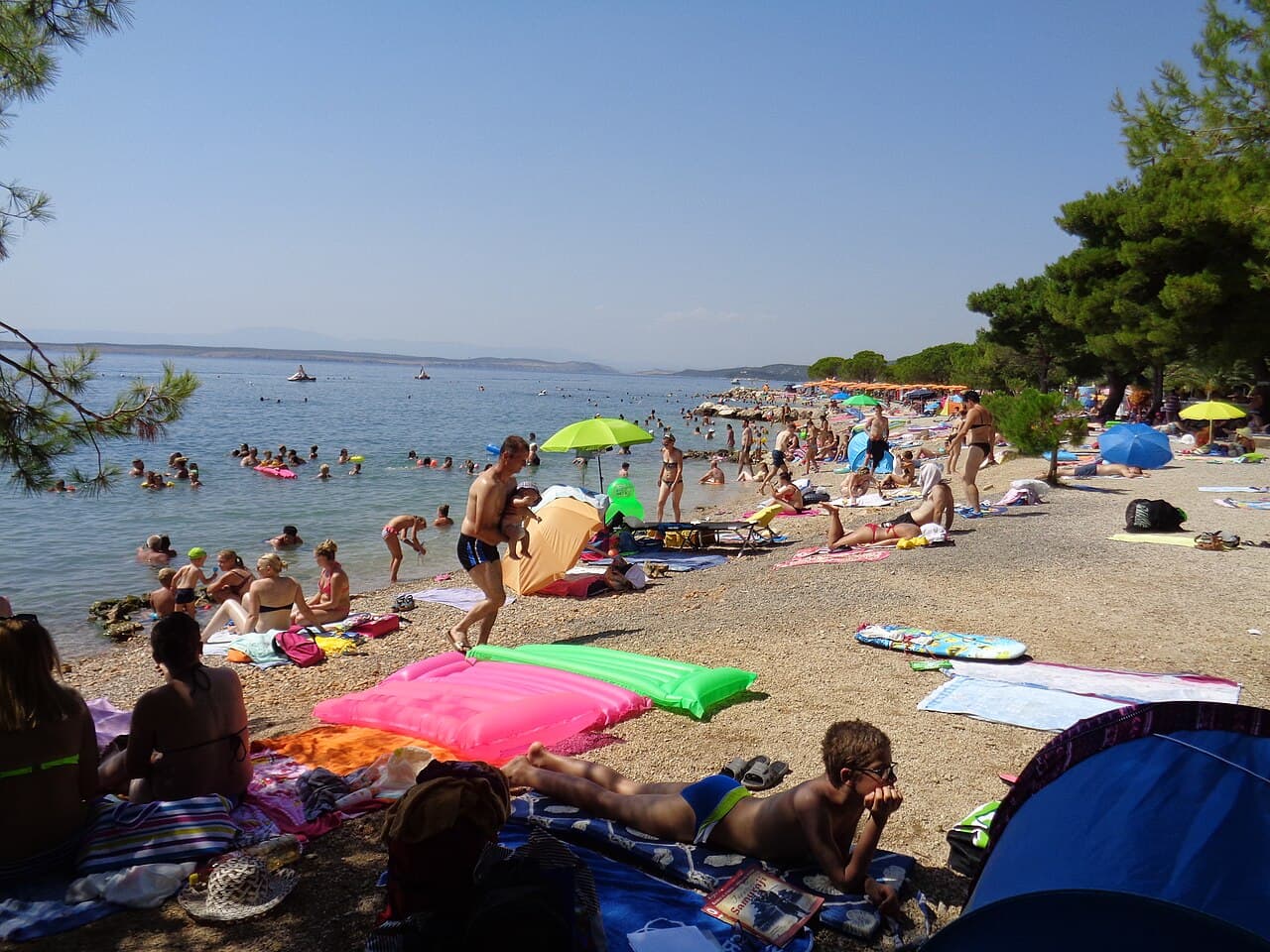
The physical makeup of the beaches dictates the type of holiday each region offers. Crikvenica is defined by its contiguous, highly developed waterfront. The main attraction is Gradsko Kupalište (City Beach), a 1.5-kilometer stretch of imported sand and fine pebbles. Entry is occasionally monitored with a €3 fee during peak daylight hours, though free zones are abundant. Further along the promenade, Crni Molo offers shallow, sandy waters that remain at knee-depth for nearly 50 meters into the sea. Two sunbeds and an umbrella at Crni Molo cost €15 to €20 per day.
Istrian beaches are overwhelmingly rocky, consisting of natural limestone slabs, large pebbles, and dramatic cliffs. Areas like Cape Kamenjak near Pula or Lone Bay in Rovinj offer clear water for snorkeling and cliff jumping. However, water shoes are mandatory, and water depths drop off rapidly, which requires close supervision for young children. Cape Kamenjak charges a €15 daily entry fee for vehicles. Luxury beach clubs in Istria, such as those at Mulini Beach, charge €40 to €60 per day for sunbed setups.
For families with toddlers or individuals with mobility issues, Crikvenica's flat, sandy infrastructure is highly functional. For adult travelers prioritizing scenic, rugged coastlines and deep-water swimming, Istria provides superior topography.
04Dining and Gastronomy
Istria holds the title for Croatia's most advanced culinary region. The peninsula produces high-quality olive oil, Malvazija wine, and is globally recognized for the white truffles harvested in the Motovun forest. Istria features several Michelin-starred restaurants, including Monte in Rovinj and Agli Amici in Rovinj, where tasting menus start at €170 per person. Traditional Istrian dining also involves "agroturizam" farm-to-table restaurants located in the rural interior, serving handmade fuži pasta and boškarin (local ox) meat. An average dinner at a standard Istrian konoba costs €30 to €45 per person without alcohol.
Crikvenica’s dining scene is straightforward and functional, focusing on standard Dalmatian and Kvarner coastal fare. Restaurants like Konoba Trabakul or Restaurant Zrinski serve grilled sea bass, fried calamari, scampi buzara, and wood-fired pizza. The culinary environment is traditional rather than experimental. An average main course in Crikvenica costs €15 to €22, making family dining significantly cheaper. While Crikvenica lacks the fine-dining density and agricultural specificity of Istria, it delivers reliable Mediterranean meals at standard regional prices.
05Infrastructure and Daily Activities
The daily routine in Crikvenica revolves around the "Lungomare," a paved coastal promenade shaded by pine trees. This walkway connects Dramalj, Crikvenica, and Selce. Visitors spend mornings on the beach, afternoons at local cafes, and evenings walking the promenade, which is lined with ice cream vendors, souvenir stalls, and open-air bars.
Istria requires a more active touring schedule to maximize the experience. A typical Istrian itinerary involves driving 30 to 40 kilometers a day. Visitors might spend the morning touring the 1st-century Roman Amphitheatre in Pula (entry fee €10), drive north to eat lunch in a hilltop village like Grožnjan, and return to the coast for an evening in Poreč.
06Weather Patterns and Seasonality
Both regions experience a Mediterranean climate with hot, dry summers and mild winters, but their microclimates vary due to surrounding geography. Crikvenica sits at the base of the Velebit mountain range. During the winter and shoulder seasons, it is frequently hit by the "Bura," a strong, cold, downward-gusting wind from the mountains. Consequently, Crikvenica's tourist season is heavily concentrated between June 15 and September 15. Outside of this window, many hotels and restaurants close entirely.
Istria has a longer, more stable tourist season. Because it is a large peninsula extending into the Adriatic, it is less impacted by the direct Bura winds that hit the Kvarner mainland. Agrotourism, wine harvesting, and truffle hunting draw visitors to Istria well into late October and November. Spring cycling tours begin in Istria as early as April.
07Day Trips and Regional Exploration
Crikvenica acts as a highly efficient base for specific regional day trips. The Krk Bridge is located just 15 kilometers north of Crikvenica, providing immediate driving access to Krk Island (the bridge toll has been abolished and is now free). Visitors can also reach Plitvice Lakes National Park in exactly two hours (115 kilometers) via the D23 state road and A1 highway.
Istria offers different excursion opportunities. From the west coast of Istria (Poreč, Rovinj), travelers can book high-speed catamaran day trips to Venice, Italy. These ferries take roughly 3 hours each way and cost €80 to €90 for a round-trip ticket. Additionally, Brijuni National Park, an archipelago off the coast of Fažana, is accessible via a 15-minute ferry ride, with total park entry and ferry tickets costing €40 per adult during the summer.
08Conclusion: Which is Better in Crikvenica?
Crikvenica outperforms Istria in three distinct categories: mainland accessibility, flat sandy/pebble beach infrastructure, and overall vacation affordability. The ability to drive from Zagreb in under two hours, park the car for a week, and walk entirely on flat promenades between beaches and restaurants makes Crikvenica highly efficient. It is better suited for travelers who want a traditional, stationary sea-and-sun holiday without the pressure of daily driving tours.
Istria remains the better choice for travelers seeking culinary depth, historical Roman and Venetian architecture, and a dynamic road-trip environment across diverse topographies.