01Quick Planning Facts
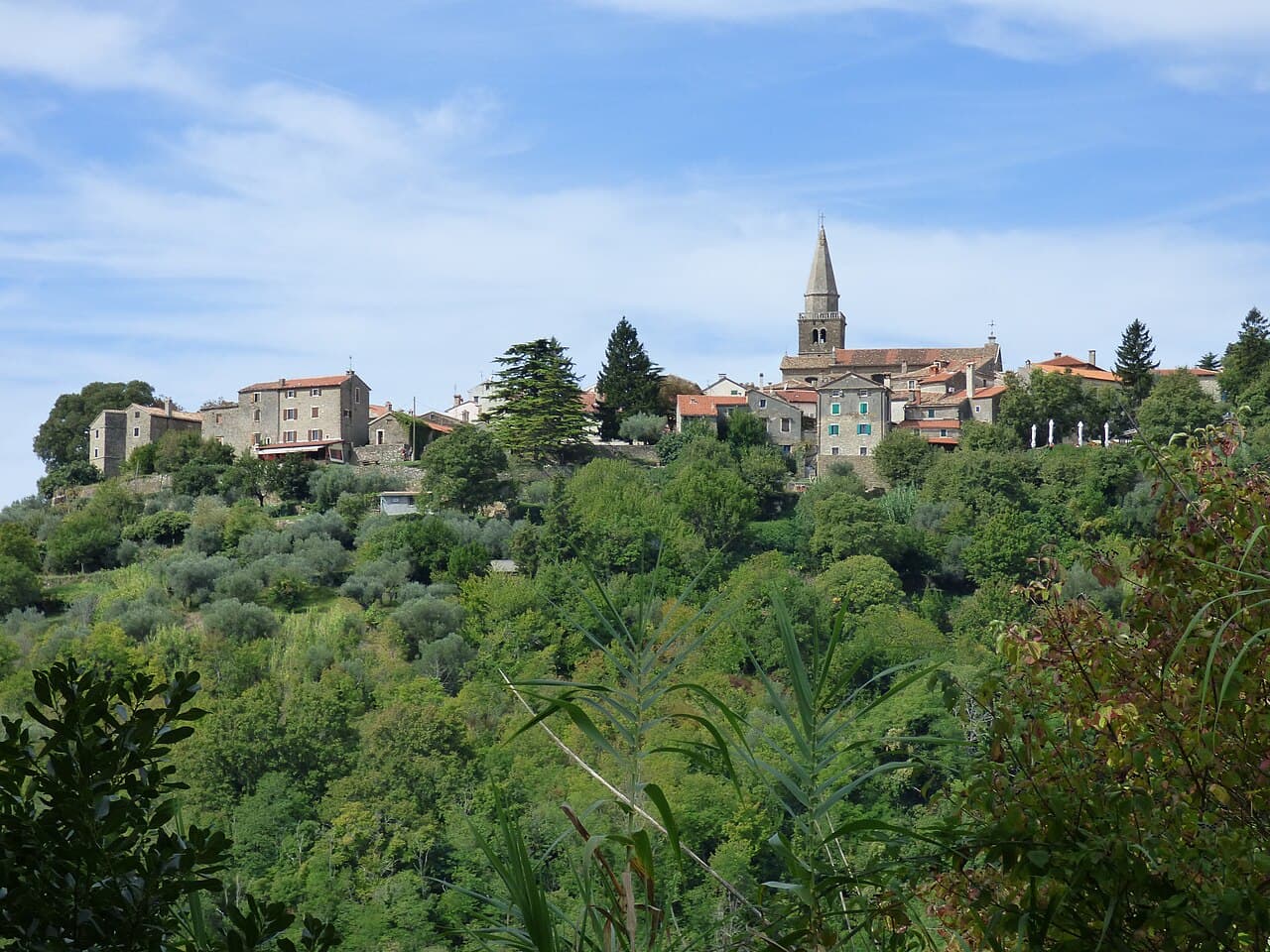
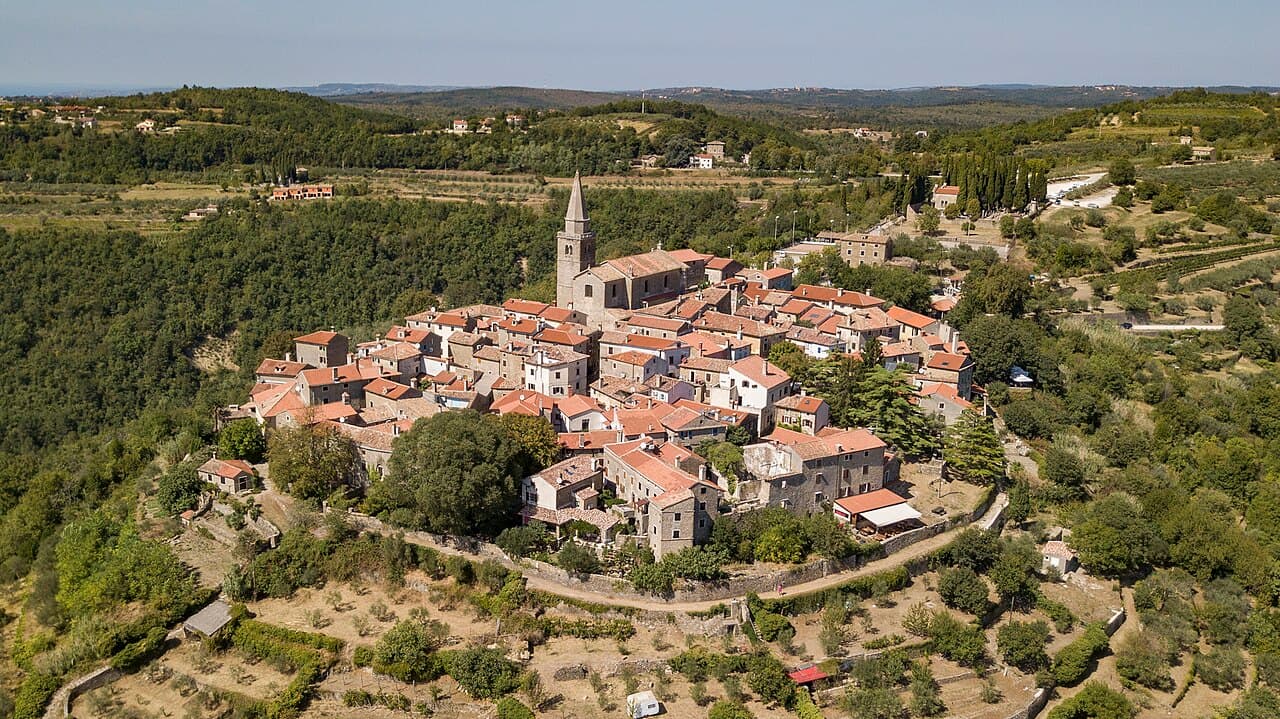
Grožnjan sits in northwest Istria, close to the Slovenian and Italian borders. Most day trips are 15 to 60 minutes by car. The hill towns lie inland. The beaches and the large coastal towns lie to the west. Slovenia and Italy are both reachable in under an hour, and there are normally no routine passport checks between Schengen countries. Carry an ID card or passport anyway.
Public transport from Grožnjan is very limited. Buses are infrequent and do not link well to the other hill towns. A rental car is the most practical option. A guided tour is the alternative: group tours from Rovinj, Poreč or Pula that include Grožnjan and Motovun usually cost about €90–€140 per person for 6 to 8 hours. Private tours with up to 3 people for the same route start at roughly €260, based on €87 per person.
02Best Day Trips from Grožnjan
1. Motovun and the Mirna Valley (25 km, 30 minutes)
Motovun is the standard second stop on any Istrian hill-town route. The town stands on a 277 m hill above the Mirna river valley. Visitors walk up from the car parks at the base or take the road up to the upper lot. The ramparts have a walking circuit with views over the valley and the Motovun Forest. Entry to the wall walk is a few euros.
The parking lots below the town are paid, and they fill by late morning from June to September. Arriving before 10:00 avoids the worst of the crowds. The road up is steep, so the walk takes 10 to 15 minutes from the lower lot.
Truffle add-on: The truffle-growing area around Livade, in the valley below Motovun, is the centre of Istrian truffle production. The Zigante Tartufi shop and restaurant in Livade is the best-known name. Guided truffle-hunting walks with dogs in the valley are sold at around €55–€145 per person depending on whether a meal is included. Reserve ahead in autumn, when white truffle season (roughly October to December) brings the highest demand.
Cycling option: The former Parenzana railway line runs through Grožnjan and the Mirna valley and is now a gravel and asphalt trail. Cyclists with e-bikes can ride from Grožnjan towards Motovun, but the route has climbs and some rough surfaces. Check bike hire availability in advance, since shops are scarce in the hills.
2. Buje, Momjan and the Wine Villages (8–10 km, 15 minutes)
Buje is the nearest larger town and takes about 15 minutes by car. It has a small old centre, a market and regular shops, which makes it useful for supplies. Momjan, a small hilltop village, is about 10 km from Grožnjan and is known for Malvazija and the sweet Muškat wines. The Kozlović winery in Momjan is one of the best-known producers in the area and offers tastings with advance booking. Expect about €10–€25 per person for a tasting, depending on the wines and food.
This trip suits a half day, and it combines well with Oprtalj. Designate a driver before tasting. Croatia's legal blood-alcohol limit is 0.05%, and it is 0.0% for drivers under 24 and for professional drivers.
3. Oprtalj (14 km, 20 minutes)
Oprtalj is a quiet hill town with a Venetian-era loggia, a small centre and wide views over the Mirna valley. It has far fewer visitors than Motovun. Half-day tours that pair Grožnjan and Oprtalj with a local food tasting start at about €90 per person. Self-drivers can visit Oprtalj in under an hour and continue to Motovun the same morning.
4. Umag and Novigrad (20–22 km, 25–30 minutes)
The coast is the nearest place to swim. Umag has a harbour, pebble and concrete beaches and the Stella Maris area, with pine-shaded paths along the sea. Novigrad is smaller and quieter, with a walkable seafront promenade and a compact old centre. Both towns work for a half-day beach break after a morning in the hills.
Parking in July and August costs about €1–€3 per hour in the centres, and the lots near the beaches fill by midday. Sea temperatures are comfortable for swimming from about June to late September.
5. Poreč and the Euphrasian Basilica (35 km, 40 minutes)
Poreč is the main historic stop on the west coast. The Euphrasian Basilica is a UNESCO World Heritage site and dates from the 6th century. Its Byzantine gold mosaics are the reason to visit. The ticket price is about €10 for adults, and hours are longer in summer. Check the current schedule before going, since entry can be limited during services.
The old town sits on a small peninsula on the Roman street grid. The Decumanus is the main street and is lined with shops and cafés. Allow 3 to 4 hours, including the basilica and a harbour walk. Poreč is also the base for boat trips to the Lim Fjord (about 5 hours, from roughly €45 per person).
6. Piran, Slovenia (35 km, 45 minutes)
Piran is the best international day trip from Grožnjan. The town sits on a narrow peninsula with Venetian architecture and a central square named after the composer Giuseppe Tartini. The drive crosses into Slovenia, where the euro is also used, so there are no currency changes. Cars cannot enter the old town, and visitors use the large paid garage at the edge of town (the Piran Garage Fornače, with a free shuttle in season) or the lots near Portorož. Private tours from Rovinj combining Piran and Portorož start at around €75 per person for about 6 hours.
Climb the Church of St. George's bell tower or the town walls for a view across the Bay of Piran. Seafood is more expensive than in Istria, and a main course typically costs €15–€25. A combined route with Koper or Izola takes the full day; private tours for that combination cost about €130 per person.
7. Rovinj (55 km, about 1 hour)
Rovinj is the most photographed town in Istria, and the most crowded. The old town sits on an oval peninsula, with narrow stone streets rising to the Church of St. Euphemia and its bell tower. Come before 10:00 or after 17:00 in summer to avoid cruise-excursion and tour-bus traffic. The nearest car parks outside the centre fill by mid-morning, and rates run about €1.50–€4 per hour.
A short boat trip to the islands off Rovinj or a sunset dolphin-watching cruise runs from about €28 to €45 per person. Rovinj is also the departure point for the Golden Cape (Zlatni rt) forest park, which has swimming spots and paths.
8. Hum and Roč (55 km, about 1 hour)
Hum is often described as the smallest town in the world, with a population of under 30. It is a walled hamlet of a handful of stone houses, a church and a konoba. Roč is a short drive away and is known for the Glagolitic Alphabet Alley that links it to Hum. Allow 2 to 3 hours for both. The area is also known for biska, a mistletoe brandy sold in Hum. A tour from Trieste or Rovinj often combines these with Grožnjan and Motovun.
9. Trieste, Italy (55 km, about 1 hour)
Trieste is a long day, but the trip is rewarding. Piazza Unità d'Italia is one of the largest sea-facing squares in Europe, and the Miramare Castle sits on a headland about 8 km northwest of the centre. The Caffè San Marco and other historic cafés reflect the city's Habsburg past. Parking in the centre is expensive, and the best approach is to park at a lot at the edge and walk or use the bus. Leave Grožnjan by 08:30 for a full day. Return before dark if you are not comfortable with local roads.
03Suggested Combinations
- Half day, hill towns
- Grožnjan, Oprtalj, Motovun. About 55 km in total, 5–6 hours with stops.
- Full day, culture and sea
- Poreč in the morning, then Novigrad or Umag for a swim and dinner.
- Full day, cross-border
- Piran and Portorož, back through Koper or Izola.
- Food day
- Livade truffle hunt, lunch in Motovun, wine tasting in Momjan.
04Local Tips
- Skip Rovinj in high summer unless you start early. Poreč and Piran are easier visits in July and August, and Motovun is better in spring and autumn. This is a recommendation, not a rule.
- Fuel up before the hills. Petrol stations are limited in the interior, and the nearest ones are in Buje and Umag.
- Carry coins for parking. Many lots in hill towns use machines or attendants, and card readers are not guaranteed.
- Book truffle walks 2 to 3 days ahead in autumn, and ask whether the lunch is included in the price.
- Check the weather. The inland roads are narrow and winding, and fog in the Mirna valley in autumn mornings slows driving.
- Many konobas close early in the week or in winter. Phone before driving to a small village for lunch from November to March.
05Getting Around Without a Car
A rental car gives full flexibility and costs from about €35–€70 per day, depending on the season, from Pula, Poreč or Rovinj. Taxis from Grožnjan are expensive for long distances. The practical car-free choice is a small-group or private tour, with pickup mostly offered from Rovinj, Poreč, Pula and Trieste, rather than from Grožnjan itself. Contact the operator in advance to ask about a pickup in the village.