01Where Is Lovran and How Big Is It?
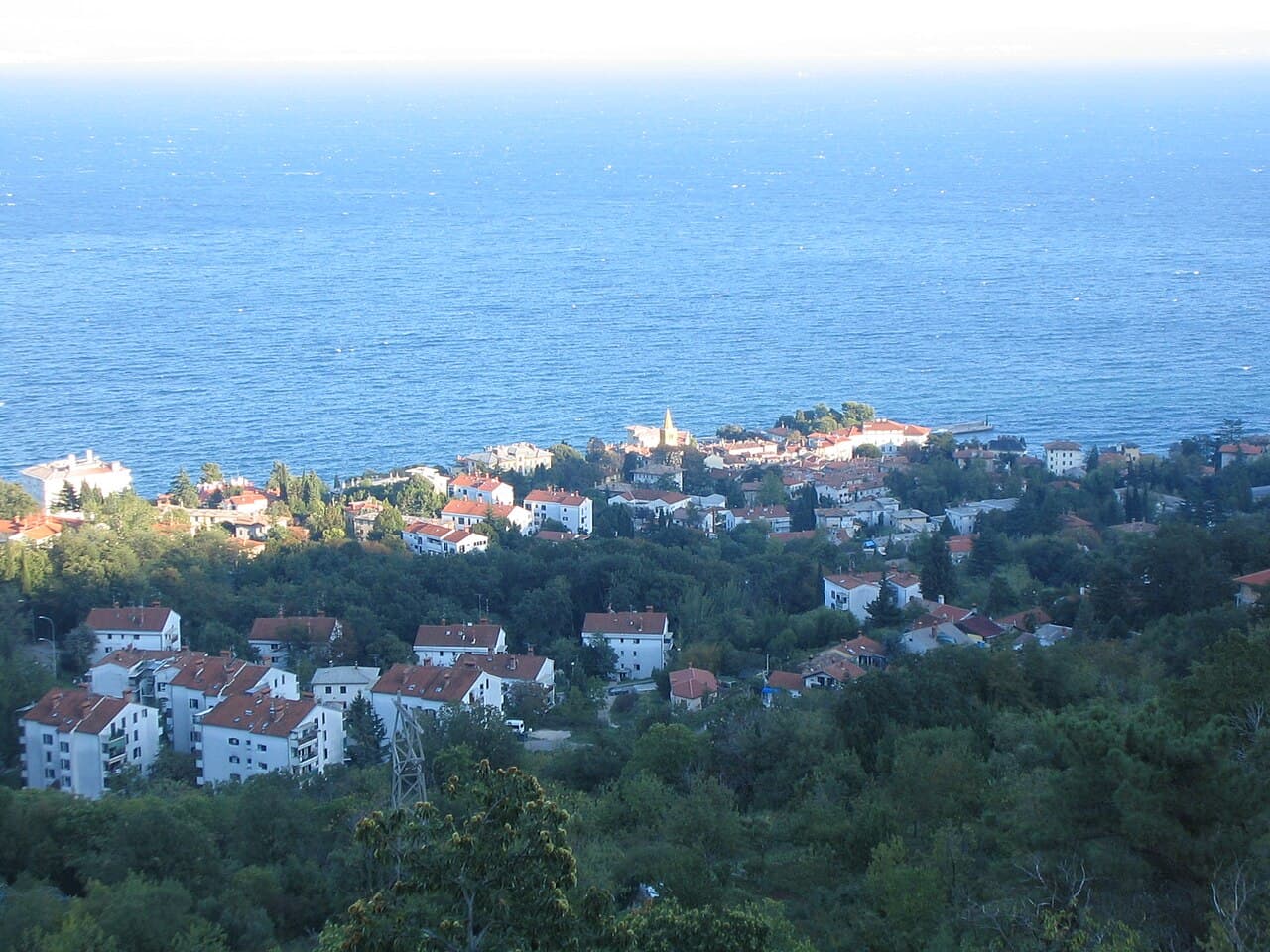
Lovran is a coastal town in Kvarner Bay, in Primorje-Gorski Kotar County. It sits at the southern end of the Opatija Riviera, about 7 km from Opatija and roughly 15 km from Rijeka. Mount Učka rises directly behind it. The town has a few thousand residents, and the old core can be crossed on foot in about 10 minutes.
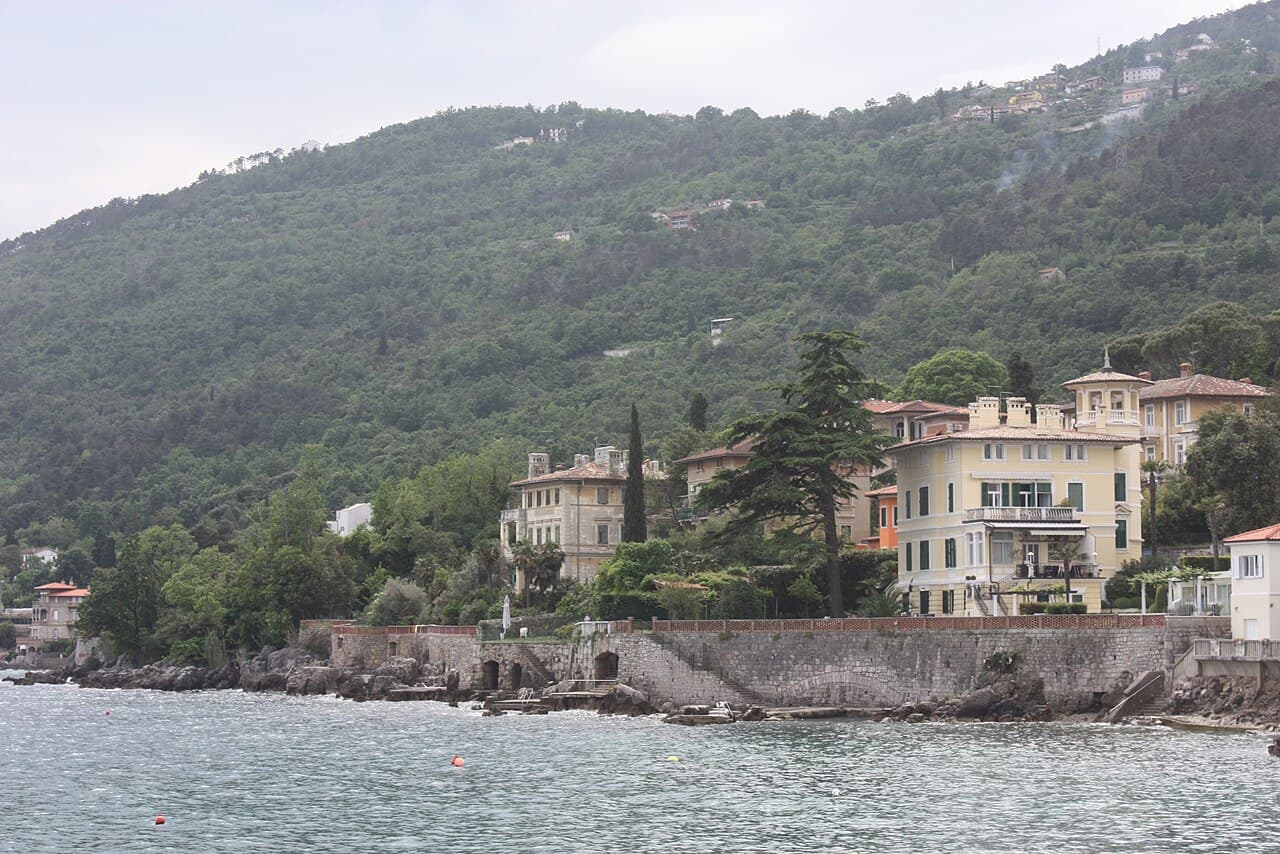
Lovran has been a seaside resort since the late 19th century, when Austro-Hungarian aristocracy built villas along the coast. Many of those villas still line the waterfront. The town takes its name from the laurel (lovor in Croatian), which grows around it.
02How to Get to Lovran
By Air
The nearest airports are Rijeka (on Krk island, about 50 km by road), Pula (about 70–80 km) and Trieste in Italy (about 90–100 km). Zagreb is about 170 km away, roughly 1 hour 45 minutes by motorway.
By Bus
Bus 32 links Volosko, Opatija, Lovran and Rijeka. It runs every 30 to 40 minutes on most of the day. A ticket costs about €1.50 at a kiosk and about €2 on board. Wave to the driver at the stop, because the bus can pass a stop where nobody is waiting. Regional buses from Rijeka and Pula also stop on the main road in Lovran.
By Car
The coastal road (D66) passes through town. Access to the old town is restricted, and parking near the waterfront fills up quickly from July to August. Paid parking in Lovran is charged by zone and by the hour. Arrive before 10:00 in summer, or leave the car outside the centre and walk in.
03What to See in Lovran on a First Visit
The Old Town
The medieval centre has narrow lanes, stone houses and small squares. The main landmark is the Church of St George (Sveti Juraj) on the main square, with Romanesque and Gothic elements and a bell tower. The town also keeps remnants of its walls and a defensive tower. The old town is compact, so allow 1 to 2 hours, plus time for a coffee stop.
The Waterfront Promenade
Villa-lined Šetalište maršala Tita runs along the water through the centre. It is flat and suits families and anyone with limited mobility. The best time is the late afternoon, when the light on the villas and the bay is at its best.
The Lungomare Promenade
The Lungomare (also called the Franz Joseph I Promenade) runs about 12 km from Volosko to Lovran. Its southern end is in Lovran. Walking all of it takes about 3 hours one way. The Lovran-to-Ika section is about 5 km and takes around 1 hour 15 minutes.
The promenade has paved sections, stairs, small beaches and bridges. Walking it from Lovran toward Opatija is the more relaxed choice, since the bus 32 stops along the main road make an easy return. Bring water in summer, because shade is patchy.
Mount Učka
Učka Nature Park is a short drive inland. Vojak, the highest peak at 1,401 m, has views over Kvarner Bay, the islands and, on clear days, as far as the Italian coast. A drive up takes about 25 to 30 minutes. Temperatures at the top are noticeably cooler than on the coast, so bring a layer even in July.
04Best Beaches Near Lovran
Beaches around Lovran are pebble and concrete platforms, not sand. Water shoes are useful. The sea is generally clear and swimmable from June to September, with water temperatures often peaking around 24–25°C in August.
- Town beaches
- Small pebble and platform areas run along the promenade within walking distance of the centre. They are free, and most have showers and nearby cafés.
- Medveja
- About 4 km south, this is a long pebble beach below a hillside. It is the most popular choice for families and has a Blue Flag record. Expect crowded sections in July and August.
- Lungomare coves
- Small bays between Lovran and Ika offer quieter swimming. They have limited facilities, so bring snacks.
Opinion: Medveja is better for a half-day beach stay, while the coves along the Lungomare are better for a short dip during a walk.
05When to Visit Lovran
| Season | What to expect |
|---|---|
| April–May | Mild weather, around 15–22°C, ideal for walking and hiking |
| June | Warm sea, long days, fewer crowds than July |
| July–August | Hot and busy, with the highest prices and the fullest parking |
| September–October | Warm sea into September, with mild weather for hiking |
| October | Marunada chestnut festival |
| November–March | Quiet, with some seasonal businesses closed |
The best overall window is May–June or September. These months offer enough warmth for swimming, and accommodation is cheaper than in peak summer.
06Marunada Chestnut Festival
Marunada is Lovran's main annual event, held on weekends in October. Local chestnuts from the Učka slopes appear in stalls and restaurants, in dishes ranging from roasted chestnuts to desserts and local wine pairings. Visitors should book accommodation well ahead for festival weekends. Expect crowds in the old town, and consider using bus 32 or the Lungomare to avoid driving.
07What to Eat and Drink
Lovran's cuisine mixes Istrian and Kvarner influences. Look for chestnut dishes in autumn, fresh fish and seafood, truffle pasta, and local cheeses. The Marasca cherry is a regional tradition. A coffee costs around €2–€3, and a main course in a mid-range restaurant generally runs €14–€25. Fresh fish sold by weight can push a meal above €35 per person, so ask the price per kilogram before ordering.
08Where to Stay in Lovran
- Waterfront villas and hotels
- The best location for walking, but the most expensive in summer. Rooms at mid-range hotels commonly cost €100–€200 per night in peak season.
- Private apartments
- The most common option. Expect about €60–€120 per night in summer, and lower prices in spring and autumn. Many are on hillsides above the centre, so check for stairs before booking.
- Opatija as a base
- Opatija has a bigger selection of restaurants and nightlife, but Lovran is quieter and cheaper in many cases.
Opinion: Lovran is better as a base than Opatija for travellers who want a quiet stay. Opatija suits those who want more shops and evening activity.
09Suggested Itineraries
One Day
Morning: old town and Church of St George. Midday: lunch on the waterfront. Afternoon: swim at a town beach. Evening: sunset walk on the promenade.
Two to Three Days
Day 1 covers the old town and beach. Day 2 covers the Lungomare walk to Opatija, with bus 32 back. On Day 3, take a drive to Učka and Vojak, or visit Medveja.
10Local Tips
- Start the Lungomare walk early, before 09:00 in summer, to avoid heat and crowds.
- Buy bus tickets at a kiosk where possible, since fares are lower than on board.
- Carry some cash. Small cafés, beach kiosks and parking machines may not accept cards reliably.
- Check the last bus times before a long walk. Services are less frequent in the evening and on Sundays.
- Combine Lovran with a half-day in Opatija, which is only 15–20 minutes away by bus.
- Bring a light jacket for evenings in spring and autumn, as the coast can feel cool after sunset.
- In summer, tap water is safe to drink and public fountains are common.
11Is Lovran Worth Visiting?
Yes, for travellers who prefer a quiet, walkable town over a big resort. Lovran is smaller than Opatija and has fewer attractions, so it fits best as a base for 2 to 3 nights, or as a day trip from Rijeka or Opatija. It is less suited to travellers who want sandy beaches or a strong nightlife scene.