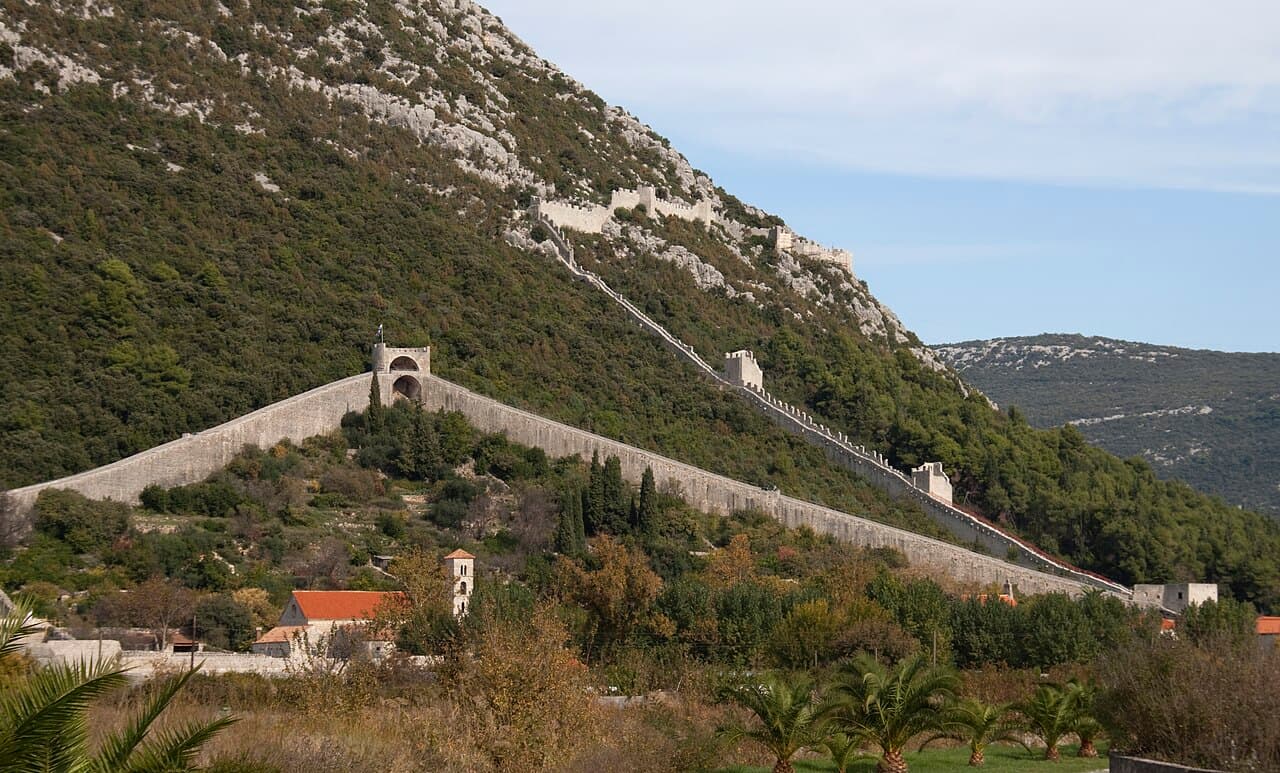
01When Is the Best Time to Visit Ston?
May, June, September and October are the best months for most visitors. In those months the 5.5 km of preserved walls are comfortable to climb, the town is far calmer than Dubrovnik (about an hour away by road), and accommodation costs less than in midsummer. Ston is small, and its main sights fit into half a day. The season matters mostly for heat on the walls, restaurant availability and oyster quality.
02Seasonal Verdict at a Glance
| Season | Verdict | Best for |
|---|---|---|
| Late spring (May–June) | Best overall | Walls, swimming nearby, long daylight |
| Early autumn (Sept–Oct) | Best overall | Walks, wine harvest, lower prices |
| March–April | Best for food | Oysters, festival, quiet streets |
| July–August | Workable, not ideal | Beach-focused trips, sea warmth |
| November–February | Quiet, limited | Budget travel, history |
03Best Season for Weather, Crowds and Price Combined
No single season wins on all three counts, so the choice comes down to trade-offs.
- Weather
- The wall climb is steep and mostly unshaded, with many narrow steps. Cooler months make it a pleasant walk. In July and August it becomes a heat challenge.
- Crowds
- Ston gets day-trippers from Dubrovnik, mostly late morning to mid-afternoon. In shoulder months these groups are smaller. Even in summer, Ston stays far less busy than Dubrovnik's Old Town.
- Price
- Wall admission is the same all year, at €10 for adults and €5 for children over 7. Groups of 10 or more pay €8 each. The ticket also covers the Veliki Kaštio fortress. Dubrovnik's walls cost €35–40 by comparison. Accommodation and restaurant prices are what rise and fall with the season.
The decisive pick is late May to mid-June, or the second half of September. Both give warm weather, open restaurants and sea warm enough for swimming at nearby beaches, without peak-season pricing.
04Why Spring and Autumn Beat Summer in Ston
The walls are the main reason. The full route to Mali Ston is about 5.5 km and takes roughly 2 to 2.5 hours with photo stops, though a shorter climb on the Ston side takes much less. Hours run long in late spring and early autumn, so starting at 08:00 is realistic. In summer, even an early start brings heat by the time you reach the top.
Opening hours change by season. Recent listings show about 08:00 to 18:30 in April and May, 08:00 to 19:30 in June and July, 08:00 to 18:30 in August and September, and 08:00 to 17:30 in October. From November to March, hours shorten to about 10:00 to 15:00. Confirm hours before going, because operators adjust them.
05When to Go for Oysters
Mali Ston Bay is Croatia's oyster centre, and the flat oyster (Ostrea edulis) has been farmed here since Roman times. Oysters are served year-round, but quality peaks in late winter and early spring. The Days of Mali Ston Oysters festival is held in March around 19 March, St Joseph's Day. March and April suit food-focused trips, though weather is cooler and some seaside services run on limited schedules. Restaurants well known for oysters in Mali Ston include Bota Šare and Kapetanova kuća, and both fill up in July and August.
06When to Go for Wine and Harvest
Late September into early October coincides with the Plavac Mali harvest on the Pelješac peninsula. This pairs well with a Ston base. Small wineries usually need appointments, so book ahead. A Pelješac and Ston day tour from Dubrovnik costs about €60–80 for a half day and €80–120 for a full day with winery stops.
07Is Summer Ever the Right Choice?
Yes, for travellers whose priority is swimming and who are tied to school holidays. July and August work if you follow a heat-aware routine:
- Climb the walls at 08:00, when the gates open.
- Eat lunch in Mali Ston, then rest through mid-afternoon.
- Visit the saltworks in the evening, when summer hours run to 20:00.
- Reserve restaurants several days ahead.
08When Winter Makes Sense
November to February is quiet and cheap. The trade-offs are shorter wall hours (about 10:00 to 15:00), fewer open restaurants and less daylight. It suits travellers who want history and calm, not beaches.
09Local Tips
- Go early.
- Arriving at 08:00 means you get the wall climb before day-trip buses arrive from Dubrovnik.
- Wear proper shoes.
- The steps are steep and uneven, and trainers with grip are advised over sandals.
- Combine the stops.
- The saltworks ticket is about €10 and includes a salt-harvest film. Salt-making happens under summer sun, so the saltworks are most active in the warm months.
- Allow 2–3 hours for a short stop
- from Dubrovnik: 30–40 minutes on the walls, then lunch in Mali Ston.
- Stay one night if possible.
- After the day-trip crowds leave, Ston is calm and quiet.
10Final Recommendation
Choose late May, June or September for the best balance. Pick March only if oysters are the main reason for the trip. Treat August as the least efficient month for Ston: it is hot, it costs the most, and it is the busiest. Plan at least half a day, or a night, for the walls, saltworks and oysters.


