01Does Vodice Have a Dog Beach?
Yes. Vodice has an official dog beach called Stara škola, located in the town centre close to the main tourist office. It is a pebble beach with clear water and parking nearby. Shade is limited, so bring an umbrella or a pop-up shelter and visit before 10:00 or after 17:00 in July and August.
Two more dog-friendly beaches sit within a short drive:
- Srima
- a rocky beach in the far east of Srima, quieter than the town beach.
- Bristak, Tribunj
- a pebble beach with a section reserved for dogs and their owners. A fenced area for children sits beside it.
Boards at the dog beaches list rules in Croatian and English. The usual rules: dog on a leash, owner carries hygiene equipment, owner removes droppings and rinses where the dog has urinated. Some signage also asks for a muzzle, so carry one.
02Are Dogs Allowed on Other Beaches in Vodice?
In Croatia, a beach without a "no dogs" sign is generally open to dogs, but many town beaches and hotel beaches ban them in practice. Vodice's main city beaches and the beaches at hotel complexes are best treated as no-dog zones. Check the signage at each entrance. The three designated dog beaches are the safe choice. For longer days, rocky coves outside town and the Tribunj side are calmer than the busy centre.
03Dogs in the Old Town, Promenade and Restaurants
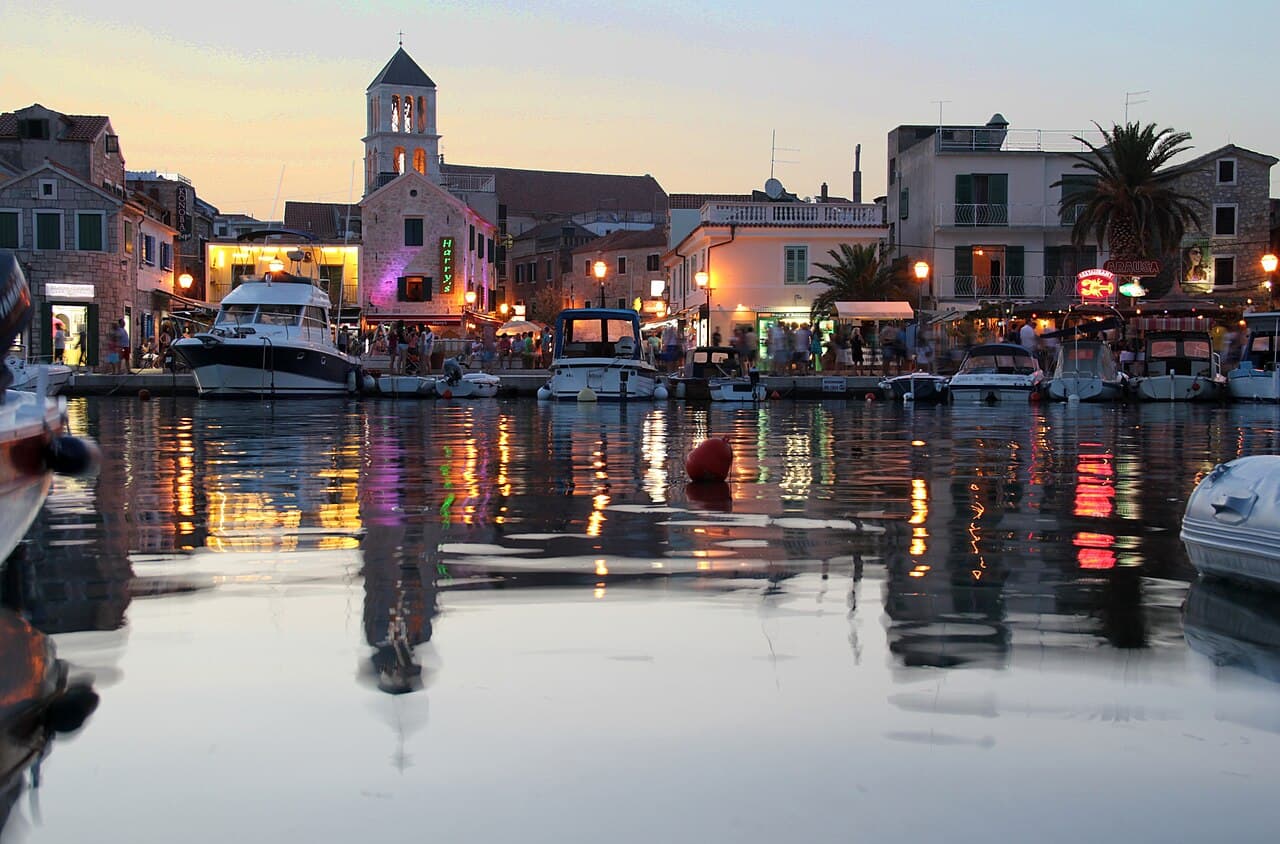
Vodice's old town is small and fully walkable, and the waterfront promenade is flat. Dogs on a leash are normal here. Most restaurants and cafés allow dogs on outdoor terraces, and many bring a water bowl. Indoor dining is the exception: dogs are usually not permitted inside. Ask before sitting down. Pavement stone and promenade paving get very hot at midday, so walk in the morning or after sunset.
04National Parks: Krka, Kornati and Day Trips
Krka National Park allows dogs when they are with their owners and on a leash at all times. Dogs are not permitted on Visovac Island, and a muzzle is required on park buses and boats. Swimming in the river is not permitted for people, and the same applies to dogs. The wooden walkways at Skradinski buk get crowded from June to September, and the visit is stressful for most dogs in peak season. Go early in spring or autumn.
Kornati and island cruises: small dogs are often accepted on excursion boats, but approval comes from each operator. Confirm before paying. Some protected islands and sites do not admit dogs.
05Ferries and Catamarans With a Dog
Jadrolinija carries pets free of charge. On conventional ferries a dog must be leashed and muzzled and stays on the open deck, or in the car on car-ferry decks where permitted. On catamarans and fast ferries only dogs up to 8 kg are allowed, in a carrier of up to 45 × 35 × 25 cm. A large dog cannot use the catamaran, so plan island trips on car-ferry lines. Service dogs are allowed in all passenger areas.
06What Accommodation Charges for a Dog
Pet-friendly apartments and villas around Vodice commonly add a cleaning or pet fee of about €10–€20 per night, or a flat €30–€80 per stay. Some hosts accept dogs for free, and some cap the number at one or two animals. Hotels and campsites usually charge per day. Confirm the fee, size limit and number of dogs in writing before you book. Ground-floor apartments with a garden or terrace are the most practical choice. Air-conditioning matters more than a pool.
07Summer Heat and Best Months
July and August regularly reach 30–35 °C, with hot pavements and warm sea. Never leave a dog in a parked car. Walk at dawn and dusk. Avoid asphalt at midday and check pads for burns.
The best months are May, June, September and early October. Temperatures sit in the low to mid 20s, the sea is warm enough for swimming from late May, and beaches and Krka are far quieter. September is the strongest choice overall.
08Vet Basics
Croatian vets work to EU standards, and Vodice is close to Šibenik (about 15 km), where larger clinics are located. Expect a consultation to cost roughly €25–€50. Bring the pet passport. Ticks and sandflies are present from spring to autumn, so use a tick preventive and ask your home vet about leishmaniasis protection for Dalmatia. Jellyfish are uncommon, but sea urchins on rocky shores can hurt paws. Carry fresh water for the beach, because drinking seawater causes stomach upsets.
09EU Pet Passport and Entry Rules
For dogs travelling from another EU country, three things are required:
- An ISO 11784/11785 microchip, implanted before or on the same day as the rabies vaccination.
- A valid rabies vaccination, given at least 21 days before travel for a first vaccination.
- An EU pet passport issued by an authorised vet.
The passport is checked at entry, and Croatia does not require tapeworm treatment. Since 22 April 2026, new EU rules have applied: passports for pets are issued only to owners whose main home is in the EU, and passports issued in Great Britain are no longer accepted for entry. Travellers from the UK, the USA and other non-EU countries need an animal health certificate issued within 10 days of travel. Serbia and Montenegro require a rabies titre test on entry to the EU. Croatia is in Schengen, so there is no passport check for people when driving from Slovenia or Hungary. Dog documents can still be checked.
10Verdict: How Dog-Friendly Is Vodice?
Vodice scores 8 out of 10 for dogs. It has an official dog beach in the town centre, two more within a short drive, a flat promenade, terraces that welcome dogs and cheap or free ferry transport on car-ferry lines. The weak points are shade on Stara škola, limits on catamarans and Krka boats, and the heat in July and August. The Stara škola beach looks ideal on a map, but with almost no shade it is only comfortable early or late in the day, so the Tribunj side is the better choice for a full beach afternoon. Come in May, June or September for the best trip.


