01How Much Time Does Grožnjan Need?
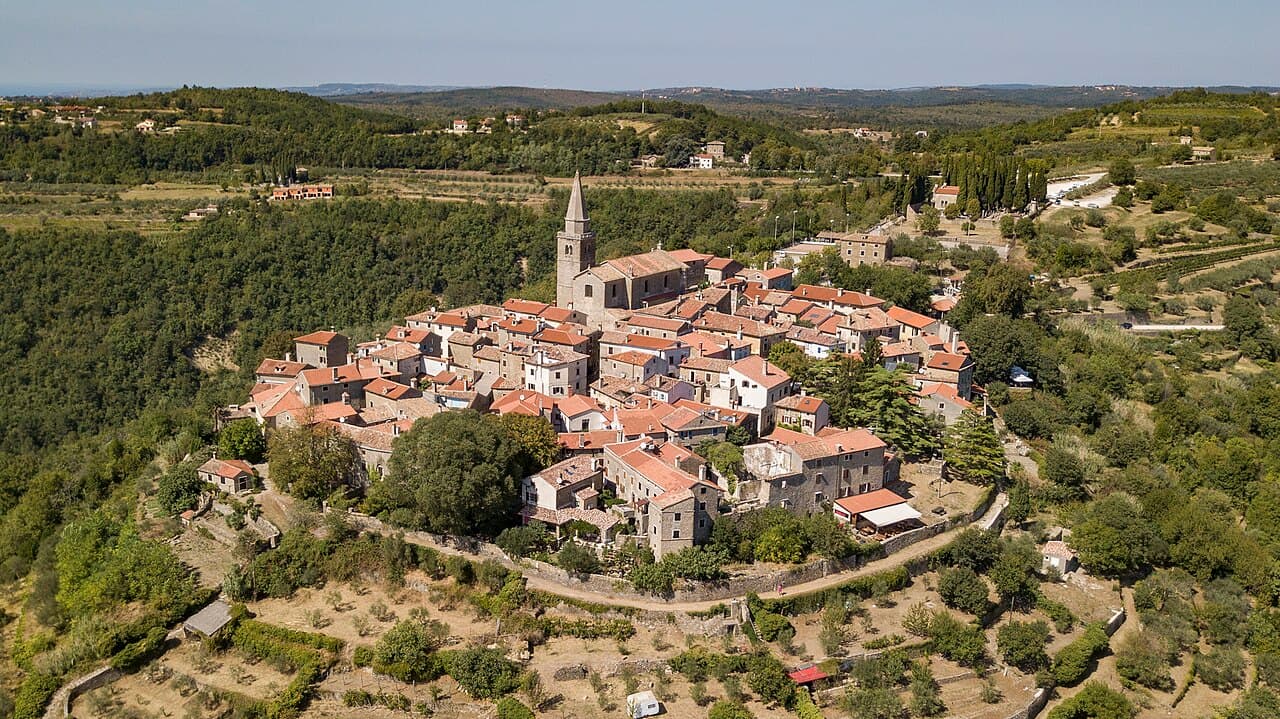
Grožnjan (Grisignana in Italian) is a very small hill town. Walking every street takes about 60–90 minutes. With gallery stops, a long lunch and a viewpoint, 3–5 hours is realistic. A full day makes sense only if the plan includes a cycling section or an evening concert.
The town was declared a "City of Artists" in 1965, when artists began restoring abandoned stone houses. Jeunesses Musicales Croatia has been based here since 1969. Roughly 30 to 160 people live inside the walls depending on how they are counted. The town has more studios than a place this size would normally have.
02Getting There and Parking
Grožnjan is about 75 km from Pula (roughly 1 hour 15 minutes by car). It is about 20–25 km from Umag and Novigrad (around 30 minutes), and about 10 km from Buje. Poreč and Rovinj are roughly 35 km and 65 km away, and Trieste in Italy is around an hour's drive.
There is no useful public transport. Bus service is minimal and there is no train, so a rental car, a tour or a bicycle is the practical option. The historic centre is car-free. Cars stay in the parking areas outside the walls, and the walk from there to the main square is 3–5 minutes. Parking is paid in season. Bring coins or a card for the machine.
03One-Day Grožnjan Itinerary
Morning (9:00–12:30): Gate, Loggia and Galleries
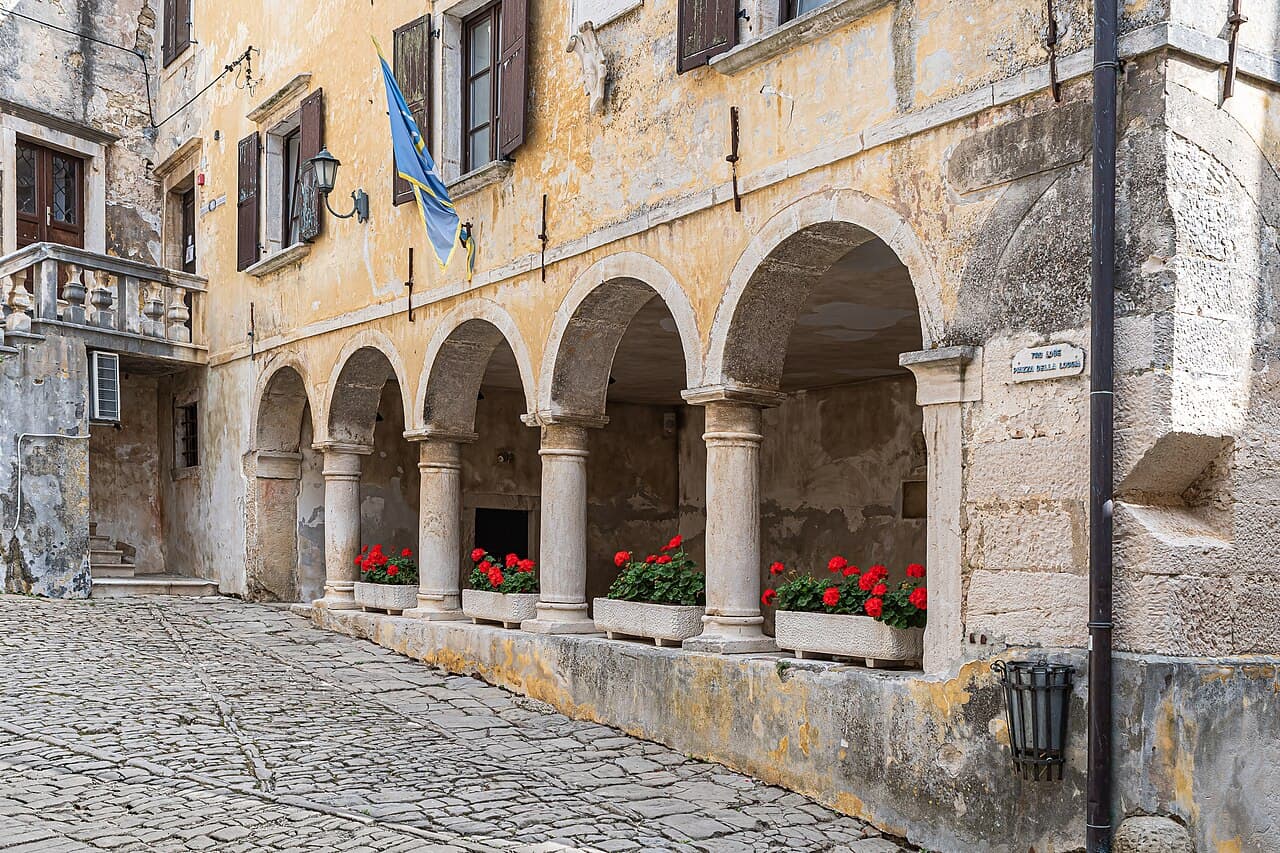
9:00–9:30, Town gate and loggia. Enter through the old gate, where Venetian coats of arms and a lion mark the period of Venetian rule. Just inside is the loggia dating from 1597. It now houses Fonticus Gallery, the town's main exhibition space, with rotating shows of Croatian and international artists.
9:30–11:00, Ateliers. Follow the side lanes rather than the main street. Most studios are small, run by the artist who works there, and sell directly. Prices range from about €10–20 for small prints and ceramics to several hundred euros for large paintings. Hours are informal. Many open around 10:00 and close mid-afternoon, with later opening in summer. Many close or open by appointment from November to March.
11:00–12:00, Spinotti-Morteani Palace and the castle. The palace, once a notary and landowner residence, and the castle now serve the music centre. Concert halls are normally closed to casual visitors outside events, so view the exteriors and courtyards.
12:00–12:30, Church of Saints Vitus and Modestus. The churchyard has one of the best views over the Mirna valley and inland Istria. On clear days the view stretches a long way.
Midday (12:30–14:30): Lunch
The village has a few small konobas and cafés, and most serve Istrian staples: fuži or pljukanci pasta, prosciutto, sheep and goat cheeses, and truffle dishes. Expect €12–18 for pasta mains and €25–40 for a truffle-focused main. A glass of Malvazija (white) or Teran (red) costs about €3–5. Book ahead on festival evenings and summer weekends, since the few kitchens fill quickly.
Truffle products can be bought at the Zigante Tartufi shop. Jars and pastes start around €10, with fresh truffle priced by weight and seasonally variable.
Afternoon (14:30–18:00): Parenzana or Wine
The old Parenzana railway line, now a signed cycling and walking route, passes the town. The Grožnjan–Buje section is about 10 km one way, with gentle gradients, stone cuttings and short tunnels. The Grožnjan–Livade section runs downhill toward the valley and truffle country, and can be extended toward Motovun. Walking the return uphill is demanding in summer heat, so cyclists should plan a pickup or use an e-bike.
The alternative is a tasting at one of the family wineries and olive oil producers in the surrounding hills. Tastings usually cost €10–25 per person and need a booking by phone.
Evening: Sunset and Music
The terrace at Belvedere is the best place to watch sunset. In July the same terrace hosts the Jazz is Back BP festival.
04Jazz is Back and the Music Calendar
The festival has run since 1999 and holds one concert each night for two weeks, starting around 21:30 at Terasa Belvedere. In 2026 it ran 13–26 July, and the 2027 edition is expected in a similar mid-to-late July window. Confirm dates with the Grožnjan tourist board before booking. The festival is run alongside the Jeunesses Musicales Croatia jazz summer school, so students also perform in the streets.
Other music events: Jeunesses Musicales runs masterclasses and workshops in several periods through the year. In 2026 these included guitar and flute courses in July and August, an opera studio in early August, and orchestra academies in May and September. These are mostly teaching events, but practice sessions and concerts are often open to the public.
05Best Time to Visit
- May–June
- Most galleries open, moderate temperatures, fewer tour groups.
- July
- Best for music, hottest, and busiest in the evenings.
- September–October
- Quieter, good for wine and truffle season, with galleries still mostly open.
- November–March
- Many studios closed, and some restaurants operate only at weekends.
Midday arrivals meet the largest day-trip crowds. Arriving before 10:00 or after 16:00 gives the lanes largely to the residents.
06Combining Grožnjan With Other Stops
| Stop | Approx. distance | Why combine |
|---|---|---|
| Buje | 10 km | Hill town, Parenzana trail link |
| Motovun | 25 km | Truffle region, walls walk |
| Novigrad | 20 km | Seaside lunch, old harbour |
| Umag | 25 km | Beach time after the hills |
| Poreč | 35 km | Euphrasian Basilica (UNESCO) |
Motovun in the morning and Grožnjan in the evening is the most efficient pairing for a base on the western coast, since the evening concert and sunset fit the hill-town timetable.
07Where to Stay
Accommodation inside the walls is limited to a few guesthouses and rented stone houses. Prices run roughly €70–140 per night for double rooms in season, with larger villas around the surrounding countryside costing more. Staying over is worth it only for the July festival or if sunset and night quiet are the point. Otherwise, Novigrad, Umag or Buje offer more choice and lower prices.
08Practical Tips
- Wear flat shoes. The lanes are steep, polished stone, and slippery when wet.
- Carry some cash, since smaller studios may not take cards.
- Water fountains are rare in the village, so bring a bottle in summer.
- Ask permission before photographing artists at work or inside studios.
- The tourist board office, in the centre, gives free maps showing open ateliers.
Skip the souvenir stalls near the gate. Several sell generic trinkets, and some visitors say that the town feels more commercial there than in the side lanes. The real value is in the studios further in, where the person selling is the person who made the work.
09Budget Snapshot (Per Person, One Day)
- Parking: a few euros
- Galleries: free to browse, with possible small entry fees for special shows
- Lunch with wine: €20–35
- Bike rental (nearby operators): about €15–25 for a half day, more for e-bikes
- Concert: free
- Total without purchases: about €40–70