01How to Get to Nin from Zadar
Nin is about 15 km north of Zadar and takes roughly 20 to 25 minutes by car. A car is the most practical way to cover the town, the salt pans and the beach in one day. Regional buses run from Zadar's bus station, but the beach and the salt works lie outside the old town, so a bus visit involves extra walking or a taxi.
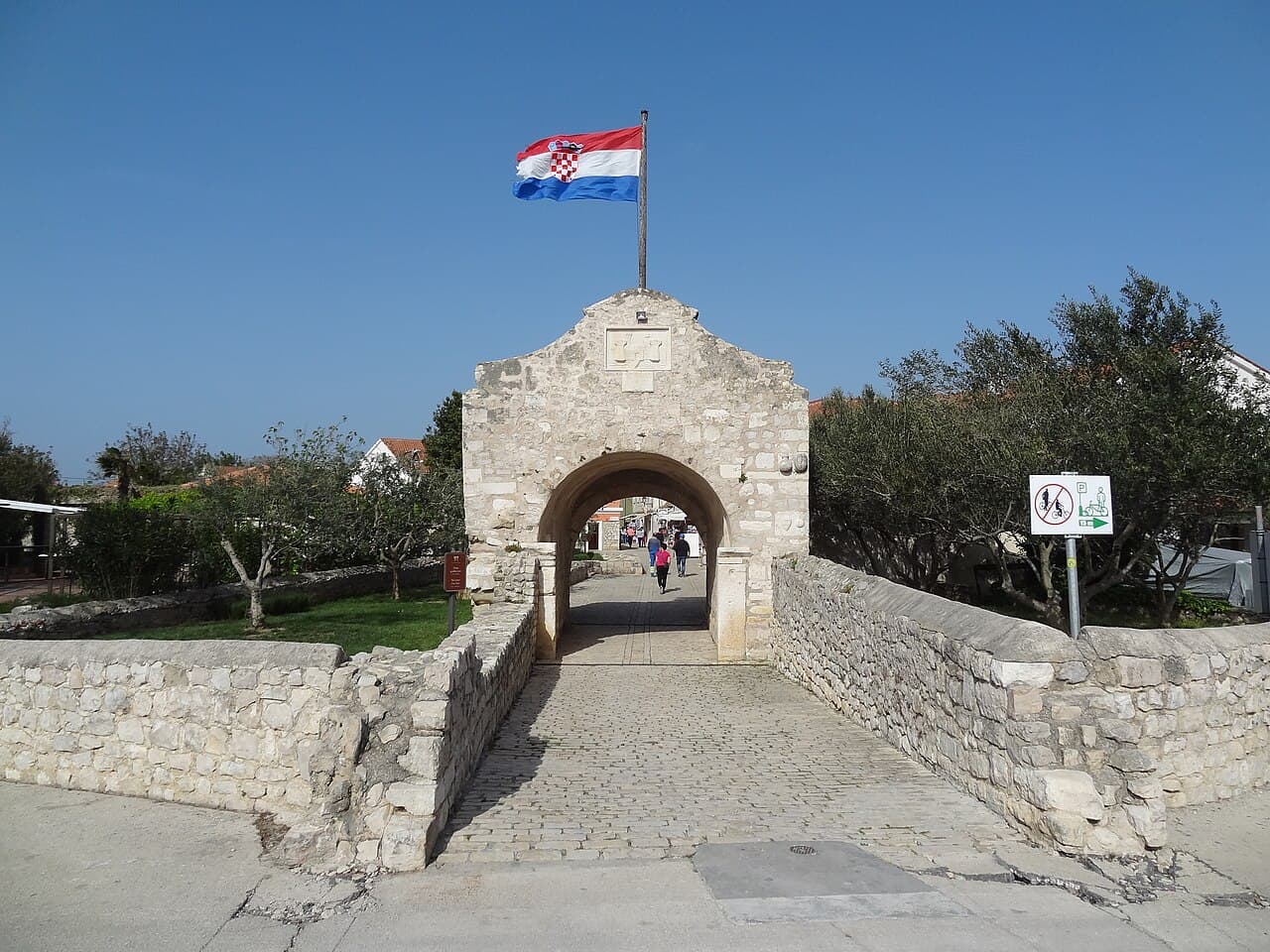
The old town sits on a small island in a shallow lagoon, linked to the mainland by two stone bridges. Parking is easiest outside the walls, and the old town is small enough to cross on foot in a few minutes.
02What to See in Nin's Old Town
Nin was an early medieval Croatian royal seat, and the old town is compact. A one-day visit covers it in about two hours.
Church of the Holy Cross
This small pre-Romanesque church dates from the 9th century. It is one of the best-known early Croatian monuments, and it is often called the smallest cathedral in the world. Its walls are built of stone blocks, and it is oriented to the sun. The exterior can be viewed without a ticket.
Grgur Ninski Statue
The bronze statue of Bishop Gregory of Nin stands near the old town gate. Rubbing the big toe is said to bring luck, and it is a standard photo stop. Visit early to avoid group queues.
Museum of Nin Antiquities
The museum covers prehistory, the Liburnian period, Roman times and the early Croatian state. Adult admission is about €4.50, and reduced tickets cost about €2.50. Allow about one hour.
03Nin Salt Pans and the House of Salt
The Nin saltworks produce salt using sun and wind, without electricity. The House of Salt (Ilirska cesta 7) charges €6 for adults, €3 for children aged 7 to 12, and nothing for children under 7. Guided tours of the salt pans are mainly offered in the summer season, and a combined museum and tour ticket costs roughly €10. The site has free parking and a shop selling salt, food products and cosmetics.
Salt harvesting happens only at certain times of year. Visitors who arrive outside harvest periods will see the pans and the museum but not workers raking salt. The pans also attract birds such as black-winged stilts, little egrets and kentish plovers.
The salt shop is worth a stop for a practical souvenir. Plain salt and flavoured salts are easy to pack and cost less than the sweets made with Nin salt, which are priced higher because of limited production.
04Queen's Beach and Medicinal Mud
Queen's Beach is a 3 km sandy beach in the Nin lagoon. Entry is free. The water is shallow for many metres, which suits young children and weak swimmers. Sandy beaches are rare in this part of Dalmatia, which is the main reason the town draws family crowds in July and August.
The lagoon has deposits of medicinal mud next to the beach. Visitors apply it to the skin, let it dry and rinse it off in the sea. The mud is free to use.
The wind makes the area popular for kitesurfing and windsurfing, and several schools operate along the lagoon in season. Bring water shoes if you have sensitive feet, because parts of the lagoon floor are muddy.
05Best Time to Visit Nin
| Season | What to expect |
|---|---|
| June | Warm sea, fewer crowds, long daylight |
| July–August | Hottest and busiest, parking fills by late morning |
| September | Warm water, calmer beaches, good for salt works |
| October–April | Quiet town, sea too cold for most swimmers, museums have shorter hours |
June and September give the best balance of warm weather and space. Summer afternoons on the beach have little shade, so bring an umbrella and sunscreen.
06How Long to Spend in Nin
One day is enough for most visitors. A practical order is the old town in the morning, a lunch stop, the salt pans in early afternoon and the beach in late afternoon. Visitors who want kitesurfing lessons or a slower beach schedule can stay overnight. Nin has private apartments and campsites, and it is cheaper than Zadar in peak season, though prices rise sharply in July and August.
07Where to Eat in Nin
The old town has small konobas and cafés, and most serve grilled fish, local lamb, pasta and salads. Expect main courses at about €12 to €25, with fish priced by weight. Ask for local olive oil, Nin salt, and Pag-style cheese on a board, which makes a simple lunch. Restaurants near the bridge and gate are the most crowded at midday, so side streets usually offer a shorter wait.
08Practical Tips for First-Time Visitors
- Go to the beach first in summer.
- Arrive before 10:00 to find parking and a spot on the sand.
- Park outside the walls.
- The old town is small, and driving inside is unnecessary.
- Carry some cash.
- Small cafés and parking points may not accept cards.
- Pair Nin with Zadar.
- Zadar's old town is 15 km away, so the two fit into a single day with an early start.
- Check the weather and wind.
- Strong wind makes the lagoon excellent for kitesurfers but less comfortable for sunbathing.
- Wear sun protection.
- The salt pans and beach offer very little shade.
Local Insider Tips
Walk or cycle between the old town, the salt pans and the beach in the evening, when the light is softer and the heat drops. The lagoon at sunset is quiet, and the pans are good for photographs. Buy salt at the saltworks shop rather than souvenir stalls in town, where the same product is generally more expensive.
The common advice to visit Queen's Beach at midday for the warmest water is poor. By then, parking is full and the shade is gone. Go early or after 16:00.
09Is Nin Worth Visiting?
Yes, as a half-day or full-day trip. It is a small town with limited nightlife, and the appeal rests on its history, the salt works and the sandy, shallow beach. Visitors who want a busy resort scene will find it too quiet.


