01Is Nin Good for Seniors?
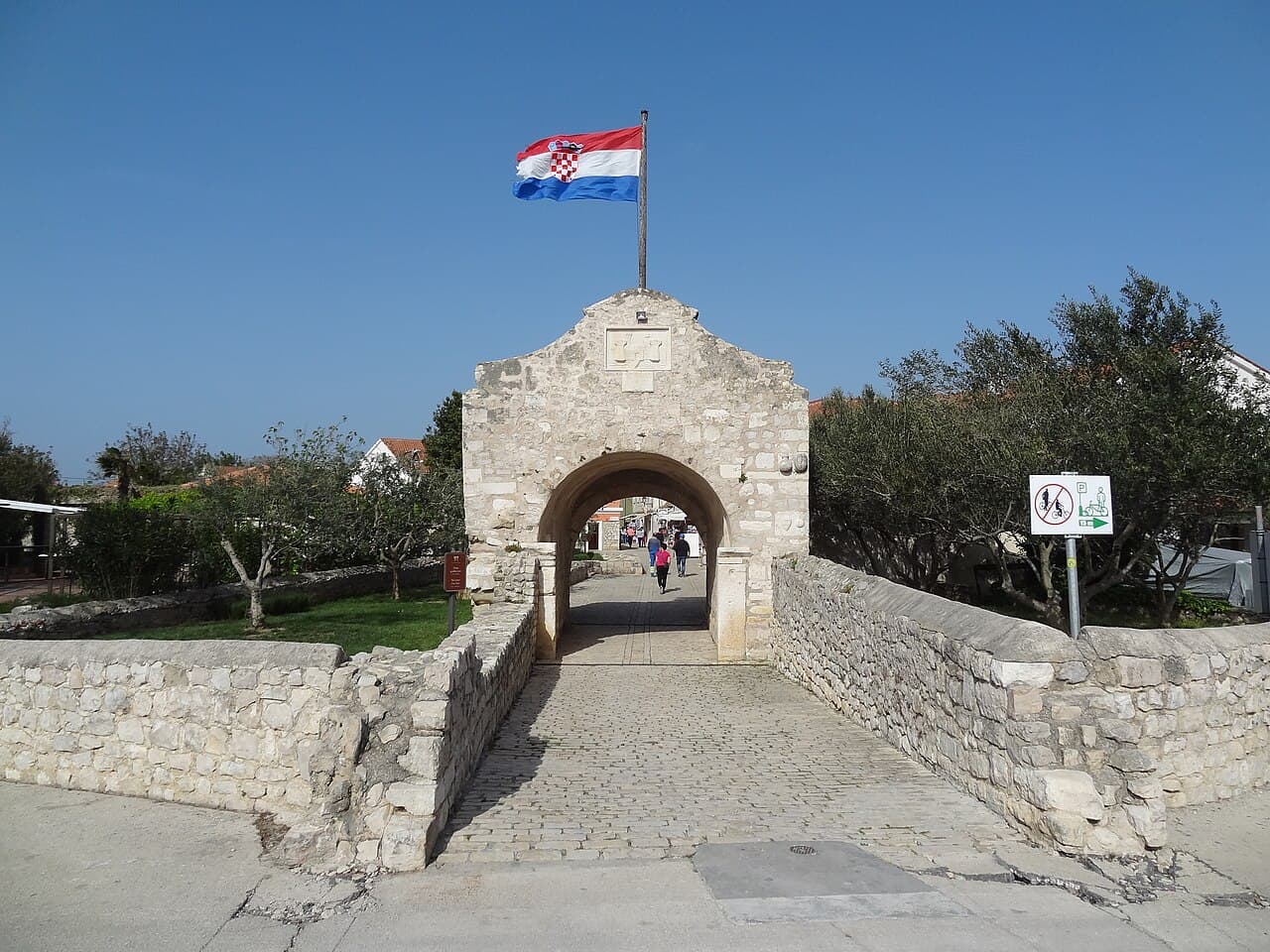
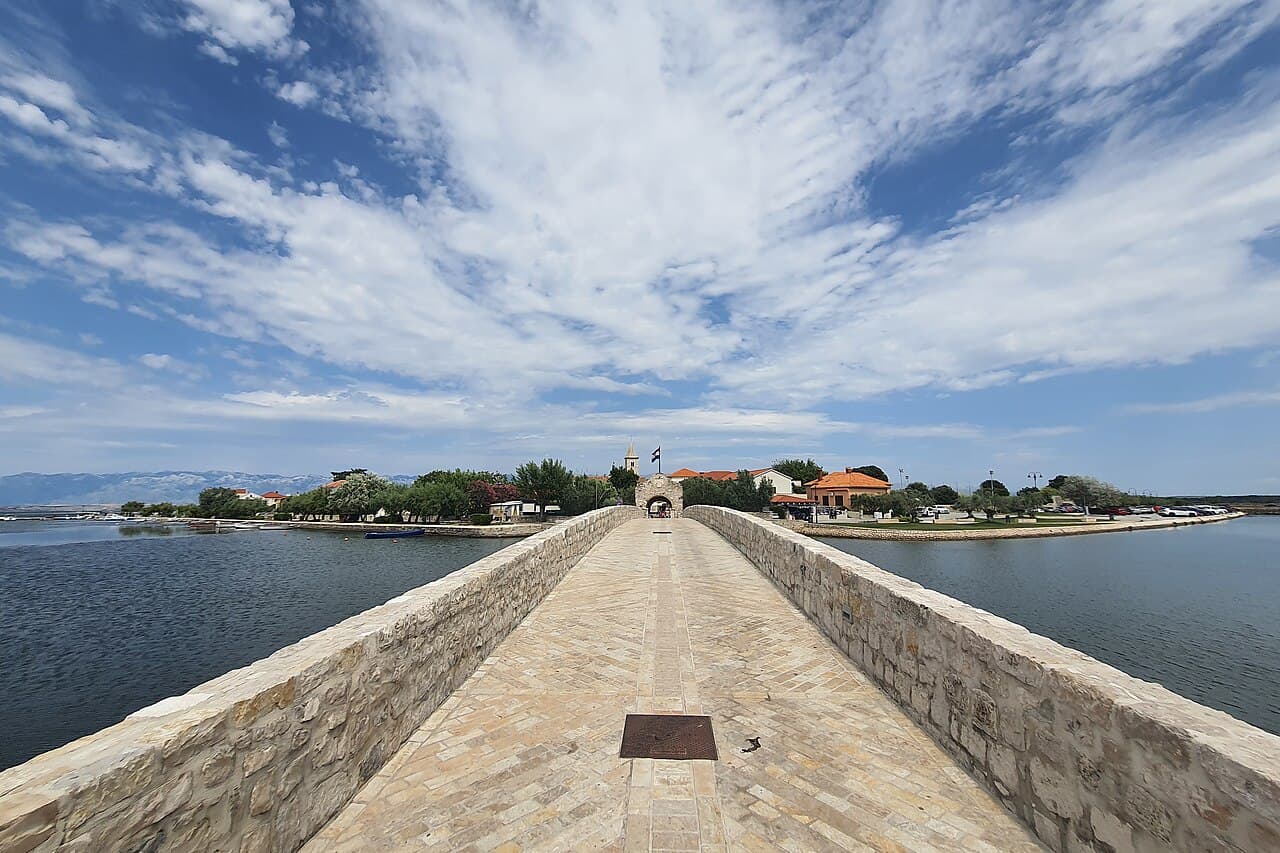
Nin is one of the easier Dalmatian towns for older travelers. The historic center sits on a small islet in a lagoon and is reached by stone bridges. The whole area can be crossed in about 10 minutes on foot. There are no hills and no stairs-heavy lanes. Cars are restricted in the core, so walking is calm.
The town is about 14 km north of Zadar, which gives quick access to the hospital, pharmacies, the airport and the bus station.
02Getting to Nin
- From Zadar Airport
- about 10 to 15 km, roughly 15 to 20 minutes by taxi or transfer. A pre-booked transfer avoids bus changes with luggage.
- From Zadar city
- local buses run to Nin, but frequency drops in the off-season. A taxi is the lower-stress option for travelers with limited mobility.
- By car
- parking lots sit just outside the old town, and most are free or low-cost. This is the practical choice, because the center is a short level walk from them.
03Moving Around the Old Town
The main surfaces are worn stone and uneven paving. These are manageable with a cane or walker, but slippery after rain. Shoes with rubber soles matter more than anything else you pack.
Most sights are inside the islet:
- Church of the Holy Cross
- an early medieval church, often called one of the smallest cathedrals in the world. The visit is brief and the approach is flat.
- Statue of Grgur Ninski (Gregory of Nin)
- a large bronze statue just outside the old town gate. Rubbing the toe is said to bring luck.
- Museum of Nin Antiquities
- a small museum covering Roman through medieval periods, with reconstructed early Croatian boats. Tickets cost about €5. Many labels are in Croatian only, so ask at the desk for English information.
- Roman Temple ruins
- viewed at street level and easy to reach.
Benches and café terraces are plentiful, so rest stops are easy to plan.
04Queen's Beach: Accessibility and Comfort
Queen's Beach is a sandy beach about 3 km long in the Nin lagoon. Sand is rare on this coast, which is mostly rock and pebble. The main access path from the town is a flat gravel track that a wheelchair can handle. Entry into the sea is gradual, and the water stays shallow for several hundred meters. There are no strong waves or currents.
This makes it one of the more suitable sea-bathing spots in Croatia for people with balance problems or joint pain. The nearby medicinal mud is a popular local treatment for sore joints. Mud application is best limited to short sessions, and anyone with heart conditions or skin problems should check with a doctor first.
The lagoon has little natural shade. Bring an umbrella, water and a hat. Beach days are best before 11:00 or after 17:00 in July and August, when temperatures often reach 30°C or higher.
05Solana Nin Salt Museum
The salt works are about 1 km from the old town, at Ilirska cesta 7. The indoor House of Salt and its shop are on the ground floor and are fully accessible to wheelchair users. The outdoor gravel paths between the evaporation fields are uneven and narrow, which makes them hard for wheelchairs and walkers. Museum entry is €6. The video and exhibits take 20 to 30 minutes. Parking is free and ample. Guided field tours cost extra, and prices vary by option, so confirm before arriving. Free open days with guided tours are announced on the Solana website.
06Opinion: Skip the Paid Salt Field Tour if Walking Is Limited
The salt works are the most heavily promoted attraction in Nin, but for travelers with limited mobility the paid tour is not the best use of money. The path is uneven and has no shade. The indoor museum for €6 and a shop visit give most of the story. Spend the rest of the day on the lagoon promenade and a long lunch in the old town.
07Best Time to Visit
May, early June, September and early October offer temperatures of roughly 20 to 27°C, lower crowds and warm water. July and August are hot and busy. The sea in the lagoon warms faster than open water, so swimming is comfortable from late May.
08Where to Stay
Look for ground-floor apartments or small hotels within 500 m of the old town. Confirm in writing whether there are steps at the entrance, whether the shower has a low or walk-in tray, and whether air conditioning is included. Many Dalmatian apartments are on upper floors without lifts, so ask directly. Accommodation near Queen's Beach reduces walking distances to the water.
09Health and Safety
- Emergency number in Croatia: 112.
- The nearest hospital is in Zadar, about 14 km away. Nin has a pharmacy and a basic health clinic for minor needs.
- EU visitors should carry the European Health Insurance Card (EHIC). Other travelers should arrange travel insurance that covers medical care.
- Carry medications in original packaging with a printed list of generic names.
10Local Tips
- Go to the Church of the Holy Cross in the morning, when the old town is quiet and cool.
- Ask the tourist information office in town for the current salt museum schedule and a printed map showing flat routes.
- Local seafood and lamb dishes are served in several konobas in the old town. Reserve a terrace table in the shade for lunch.
- Bring a lightweight folding stool if you plan to spend long periods at the lagoon.
- Travel on weekdays in summer to avoid weekend crowds from Zadar.