01Is Stari Grad Good for Seniors?
Yes, with conditions. Stari Grad is one of the oldest continuously inhabited towns in Europe, founded by Greek settlers from Paros in 384 BC. It is small enough to cover on foot, and the terrain is gentler than in Hvar Town, where the fortress hill and stepped lanes limit mobility. The main obstacles are uneven and polished stone paving, a lack of ramps in historic buildings, and summer heat.
A short trip suits people who can walk 1–2 km at a slow pace with rest stops. Wheelchair users and walker users can manage the waterfront and many cafés, but should plan around cobbles and steps elsewhere.
02Getting to Stari Grad Step by Step
By Ferry from Split
Jadrolinija runs the car ferry (line 635) all year, with up to 7 sailings a day in summer. The crossing takes 1 h 50 min. A 2026 adult fare is €5.90 in low season and €8.40 in the high season, which runs roughly from late May to late September. The ferry has a lower deck and lounge seating, and the vehicle ramp avoids stairs at boarding. Staff on the ship can usually assist on request, but tell the ticket office beforehand.
The direct Split–Hvar Town catamaran costs about €25 in high season, but it lands 20 km from Stari Grad and adds a transfer. Choose the Stari Grad ferry if Stari Grad is the destination.
From the Port to the Old Town
The ferry port lies about 1.5 km from the old town centre, which is a 20-minute walk for most people. Seniors with luggage should take a taxi (typically €8–15). Ask the accommodation to arrange pickup before arrival. Ferries at night and early morning (a 01:30 and a 05:00 departure from Split exist) arrive when taxis are scarce, so pre-book.
03Walking and Mobility in Stari Grad
Flat Routes
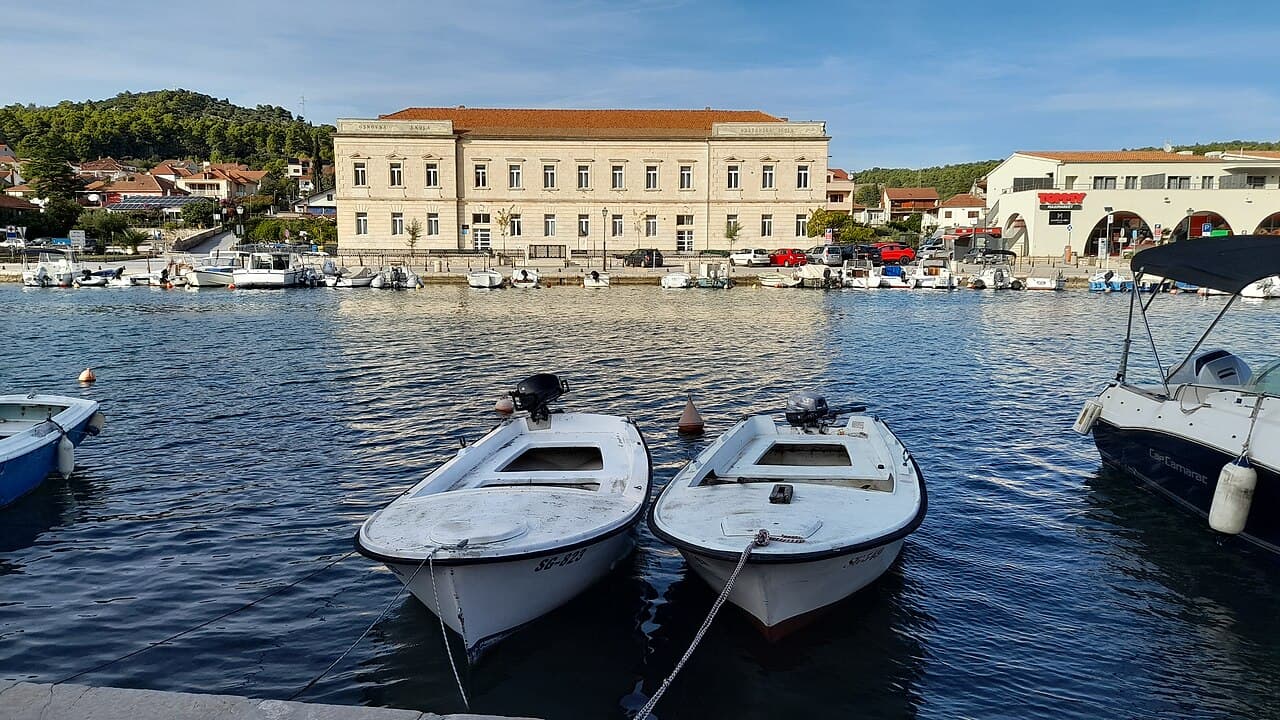
The waterfront (Riva) and the bay promenade are close to level and make the easiest walks. The promenade running around the bay is roughly 2 km, with benches and shade from pines in places. The old town's lanes are narrow and mostly flat, with limestone paving worn smooth by centuries of use.
Surface Problems
Polished limestone becomes slippery when wet or dusty. Wear shoes with rubber soles, and use a walking stick with a rubber tip. Wheeled walkers work on the Riva but struggle on cobbled side lanes. Few shops and restaurants have ramps; most cafés on the waterfront are at street level.
Tvrdalj and Other Sights
Tvrdalj, the 16th-century fortified house of poet Petar Hektorović, has a central fishpond and a garden. Entry is €5, cash only. Hours are reported as roughly 10:00–14:00 in many listings, and evening hours vary by season, so check at the door. Wheelchair access is limited because of thresholds and uneven surfaces, but the courtyard and pond can be viewed with a slow walk from the gate. Visits take 15–45 minutes.
The Dominican Monastery and its small museum, and the Stari Grad Museum in the old town, are short, low-effort stops. Both involve stairs or thresholds, so ask before arriving.
The Stari Grad Plain
The Stari Grad Plain, a UNESCO World Heritage agricultural landscape of Greek origin, begins at the edge of town. Flat gravel and dry-stone lanes allow a 1–3 km walk past vineyards and olive groves. Mornings are best. Wheelchair use is difficult on loose gravel.
04Where to Stay
Choose accommodation within 300 m of the Riva to avoid the 1.5 km port-to-town stretch on foot every day. Ground-floor apartments and rooms with a lift are scarce, so confirm on booking: ask for a ground-floor unit, a walk-in shower with no step, and air conditioning. Heritage Hotel Antique is a well-known option in the old town, but historic buildings seldom offer fully step-free rooms, so confirm room details directly.
05Best Time to Visit
| Season | Typical conditions | Senior suitability |
|---|---|---|
| April–June | Mild, 18–26°C | Best |
| July–August | Hot, often above 30°C | Difficult midday |
| September–October | Warm sea, 20–27°C | Best |
| November–March | Quiet, many places closed | Limited services |
The ferry sells out in July and August for vehicles, so seniors travelling with a car should book ahead and arrive early at the Split port.
06Opinion: Skip the Hvar Town Day Trip
Most visitors assume a first Hvar visit must include Hvar Town. For seniors, that is the wrong priority. Hvar Town is crowded, steep around the fortress and expensive, and the climb to the Spanish Fortress is a poor trade for most knees. Stari Grad gives the same Venetian-era stone streets, waterfront cafés and sea views with less effort and lower prices. Spend the saved energy on the Stari Grad Plain instead.
07Health, Safety and Practical Tips
- Stari Grad has a health centre and a pharmacy. The nearest full hospital is in Split, reached by ferry, so carry prescriptions and a printed medication list.
- Carry euros in cash. Tvrdalj and some small shops accept cash only. ATMs are available in town.
- Eat lunch early. Many restaurants close between lunch and dinner service in shoulder season.
- Rest 13:00–17:00 in summer, then walk the Riva after 18:00.
- Drink water often. Croatian tap water is safe to drink.
- Travel insurance with medical cover is advisable. EU citizens should carry a European Health Insurance Card (EHIC).
08Insider Tips
- The car ferry is calmer and has more seating than a catamaran, which suits anyone with balance problems.
- Walk the bay promenade in the morning, when shade falls across most of the western side.
- Rent a car for one day only if the accommodation is far out. It costs less than repeated taxis, and the Split ferry takes the car for €35.60–€47.60.
- Ask the accommodation host to meet you at the port, since many local hosts do this as a courtesy.