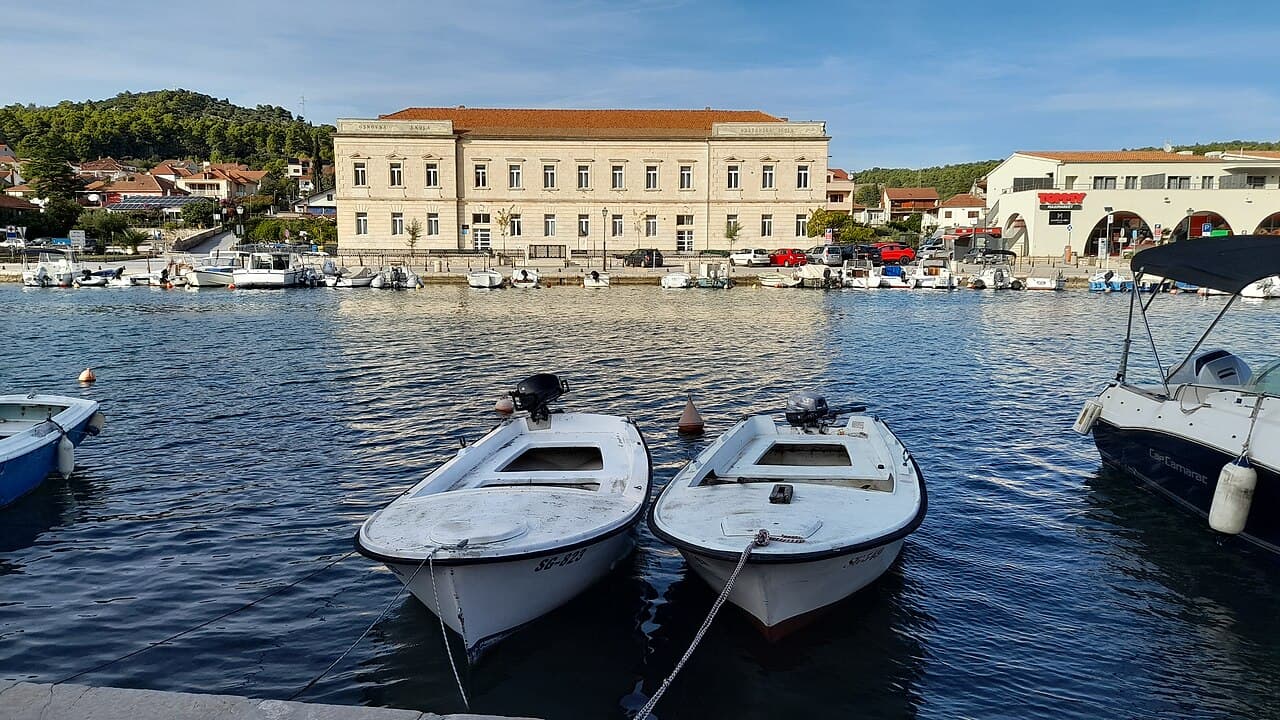
01Myth 1: Stari Grad is just where the ferry lands
The myth: The ferry from Split drops you here, a bus takes you to Hvar Town, and that is the end of it.
The reality: Stari Grad is the oldest town on the island. Greek settlers from Paros founded it as Pharos in 384 BC, and the street layout of the old core still follows medieval and Venetian lines. The Jadrolinija car ferry from Split takes about 2 hours, and the passenger catamaran takes roughly 1 hour. Adult fares on the car ferry in 2026 are €5.90 in the lower season (to 28 May and from 28 September) and €8.40 in the higher season (29 May to 27 September). The ferry port sits about 2 km from the old center, which is a 25-minute walk along the bay or a short taxi ride.
Better alternative: Plan at least half a day here. Walk from the port along the waterfront into the old town and treat the stop as a destination of its own. Hvar Town is bigger and louder. Stari Grad is where the island's history is easiest to read.
02Myth 2: Tvrdalj is a ten-minute photo stop
The myth: It is a stone house with a pond, so a quick look through the gate is enough.
The reality: Tvrdalj is the fortified home of the poet Petar Hektorović, built from the 1520s onward. It was designed as a refuge for locals as well as a private residence. Inside are a large fishpond fed by seawater, shaded courtyards, a pigeon loft, and stone walls carved with Latin inscriptions. Entry is €5 per person, and the opening window is short, usually about 10:00 to 14:00, with some seasonal variation. Cash is the safer way to pay.
Better alternative: Arrive in the first hour after opening, when the courtyard is quiet and the pond is clear. Allow 45 minutes and read the inscriptions. They are the point of the place. Visiting after 14:00 is the most common mistake, since the gate is simply closed.
Insider perspective: Visit Tvrdalj before the Stari Grad Museum, not after. The museum's local history makes more sense once you have seen Hektorović's house.
03Myth 3: The Stari Grad Plain is just farmland
The myth: UNESCO listings are for monuments, and a flat plain of olive groves is not worth a detour.
The reality: The Stari Grad Plain is one of the few places in the Mediterranean where an ancient Greek land division is still farmed. The Greek colonists laid it out in rectangular plots (the chora) in the 4th century BC. The dry-stone walls and small stone shelters (trims) still mark those plots, and olives, grapes and lavender are still grown on the same land. UNESCO listed it in 2008. Entry is free, there is no gate, and the plain can be visited at any time of day.
Better alternative: Rent a bike in town and ride the flat farm lanes in the morning, before the midday heat. The terrain is easy, so a standard city bike works. Stop at a family winery on the plain for a tasting of the local Plavac Mali or white Bogdanuša. The plain is a headline attraction here, and a walk along the road will not show it properly.
One direct opinion: guided minibus tours of the plain sound efficient but are the worst way to see it. You see it through a window and miss the quiet lanes and walls that make it worth visiting. Cycle it yourself.
04Myth 4: The old town has nothing to see beyond a few lanes
The myth: Stari Grad is pretty but has no actual sights, so a coffee on the waterfront is enough.
The reality: The old core is compact, but it holds several real stops within a few minutes' walk of each other:
- Škor square (Trg Škor): the central square of the old town, lined with stone houses and cafés.
- St Stephen's Church: the parish church on the square, with a Baroque interior.
- Dominican Monastery of St Peter the Martyr: founded in the 15th century, with a cloister, a small museum, and a painting attributed to Tintoretto. Opening hours are limited and vary by season, so check at the door.
- Stari Grad Museum: housed in the Biankini palace, a 19th-century Neo-Renaissance building. It displays finds from the Greek and Roman periods.
The Stari Grad Summer Festival also brings music, theatre and dance to the old town in the warm months.
Better alternative: Walk one loop, not a checklist. Start at Tvrdalj, move to the museum, pass through Škor square, and finish at the Dominican Monastery. The whole route takes about two to three hours with stops. The old town is best done slowly, and rushing through it gives you a tour of walls and no stories.
Insider perspective: Locals treat the harbor promenade as the town's living room. Go in the early evening, when the heat drops and the old town fills with people out for a walk.
05Myth 5: You need a car to see Stari Grad
The myth: Hvar is a big island, so bringing a car is the only way to see the sights.
The reality: The main attractions in and around Stari Grad are within walking and cycling range. A car makes the trip much more expensive. A standard car (up to 5 m long and 2 m high) costs €35.60 in the lower season and €47.60 in the higher season, one way, on top of the passenger fare. One adult with a car is €41.50 or €56.00 each way. A bicycle on the ferry costs €5.70-€8.10, and a motorcycle costs €10.10-€14.00. The car ferry also tends to be busy in July and August, and queues build before departure.
Better alternative: Travel as a foot passenger and rent a bike in town. Local buses connect Stari Grad with Jelsa, Vrboska and Hvar Town, and tickets cost roughly €3-€5 one way. In July and August the catamarans often sell out, so book online a day ahead. A car is only worth the cost if you plan to base yourself elsewhere on the island for several days.
06What a First Visit to Stari Grad Should Include
For a first visit, three things carry the trip: Tvrdalj, the Stari Grad Plain and a slow loop of the old town. Plan the day around Tvrdalj's short morning hours, then use the afternoon for the plain or the old town loop. Budget about €5 for Tvrdalj, a few euros for a bike rental, and a ferry fare of €5.90-€8.40 each way for foot passengers. Skip the car, and avoid arriving after 14:00 if Tvrdalj is on your list. One full day covers everything above without rushing, and an overnight stay lets you see the harbor in the evening.
