01How Island Hopping Works from Ston
Ston has no ferry port of its own, so island hopping starts elsewhere. The town sits on the narrow neck of the Pelješac Peninsula, and its harbour is for fishing and oyster boats. Ferries to the islands leave from other ports nearby, and the islands in the Elaphiti group are reached from Dubrovnik. Three routes work in practice.
- Ferry to Mljet
- from Prapratno, 5 km from Ston.
- Ferry to Korčula
- from Orebić, at the far end of the peninsula.
- Private boat
- from Dubrovnik that stops at Ston and the Elaphiti or North Elaphiti islands.
The best plan for most travellers is to sleep in Ston or Mali Ston and make Mljet a full day trip. Add Korčula as a second day or as a move onward along the coast.
02Getting to the Islands from Ston
Mljet: Prapratno to Sobra Ferry
The Prapratno ferry terminal is about 5 km from Ston, roughly a 7-minute drive. Taxis and local transfers cover the distance, and the walk is not practical with luggage. The Jadrolinija ferry crosses to Sobra on Mljet in about 45–60 minutes. Foot passenger fares are under €10 each way, and cars cost considerably more. Prices and timetables change between seasons, so check the Jadrolinija schedule before the trip.
In July and August, vehicle queues at Prapratno are long. Arrive well ahead of departure if you take a car. Foot passengers rarely have trouble getting a place.
Sobra is on the eastern end of Mljet. Mljet National Park, with its two saltwater lakes, is at the western end near Polače and Pomena, about 20–30 km from the ferry port. Without a car, a Mljet taxi or a catamaran from Dubrovnik is the alternative. Mljet National Park charges an entrance fee, which is higher in summer.
Korčula: Orebić to Dominče Ferry
Orebić is about 60 km from Ston, around 1 hour by car along the peninsula's main road. The vehicle ferry to Dominče on Korčula takes about 20 minutes, and Korčula Town is a short drive from there. A passenger-only catamaran also runs between Orebić and Korčula Town. The route passes vineyards and small wine villages such as Trstenik and Potomje. Potomje is the home of Plavac Mali, the main red wine grape of Pelješac.
Elaphiti Islands and Ston by Private Boat
Private speedboat tours from Dubrovnik link Ston with the northern Elaphiti islands. A typical day starts at Gruž harbour around 10:00, with a swim stop at Koločep or Jakljan, then a visit to Ston with a couple of hours on land, and the return in the late afternoon.
- Private speedboat for up to 5 people, about €600–700 per boat depending on season.
- Premium 8-hour private tour including Ston and North Elaphiti, from €1,030 per boat.
- Group half-day Ston tour with a Mali Ston Bay boat ride, oyster and wine tasting, from about €130 per person.
This suits visitors who stay in Dubrovnik and want islands and Ston on the same day. It is not a good fit for travellers staying in Ston, who already have the ferries on their doorstep.
03Which Islands Are Worth It
Mljet
Mljet is the best island day trip from Ston. About 72% of the island is forest, and the national park centres on the Veliko Jezero and Malo Jezero lakes. Visitors rent bikes or walk the lake path and take the boat to St Mary's islet with its Benedictine monastery. Pomena and Polače have restaurants and swimming spots. A full day from Prapratno works if you take an early ferry and return on an evening sailing.
Korčula
Korčula is bigger and more varied. Korčula Town has a walled old town with narrow streets, which is a good half-day walk. The island has wine regions around Lumbarda and Smokvica, producing Grk and Pošip whites. Stay overnight rather than rushing it as a day trip from Ston.
Koločep, Lopud and Šipan
The three main Elaphiti islands lie off Dubrovnik. Koločep is car-free and has about 160 inhabitants. Lopud has the sandy Šunj beach, which is unusual for the region. Šipan is the largest of the three and has quiet villages. These are easier from Dubrovnik than from Ston, since the public ferry leaves from Gruž.
04Suggested Itineraries
Two Days: Ston plus Mljet
- Day 1: Walk the Walls of Ston in the morning, eat oysters in Mali Ston at lunch, and swim at the beach near Prapratno.
- Day 2: Take an early Prapratno–Sobra ferry, spend the day at Mljet National Park, and return on the last suitable sailing.
Four Days: Ston, Mljet and Korčula
- Days 1–2 as above.
- Day 3: Drive to Orebić, stopping at wine cellars near Potomje.
- Day 4: Take the ferry to Korčula and explore the old town and the Lumbarda wine area.
05Ston Itself: What to Do Between Ferries
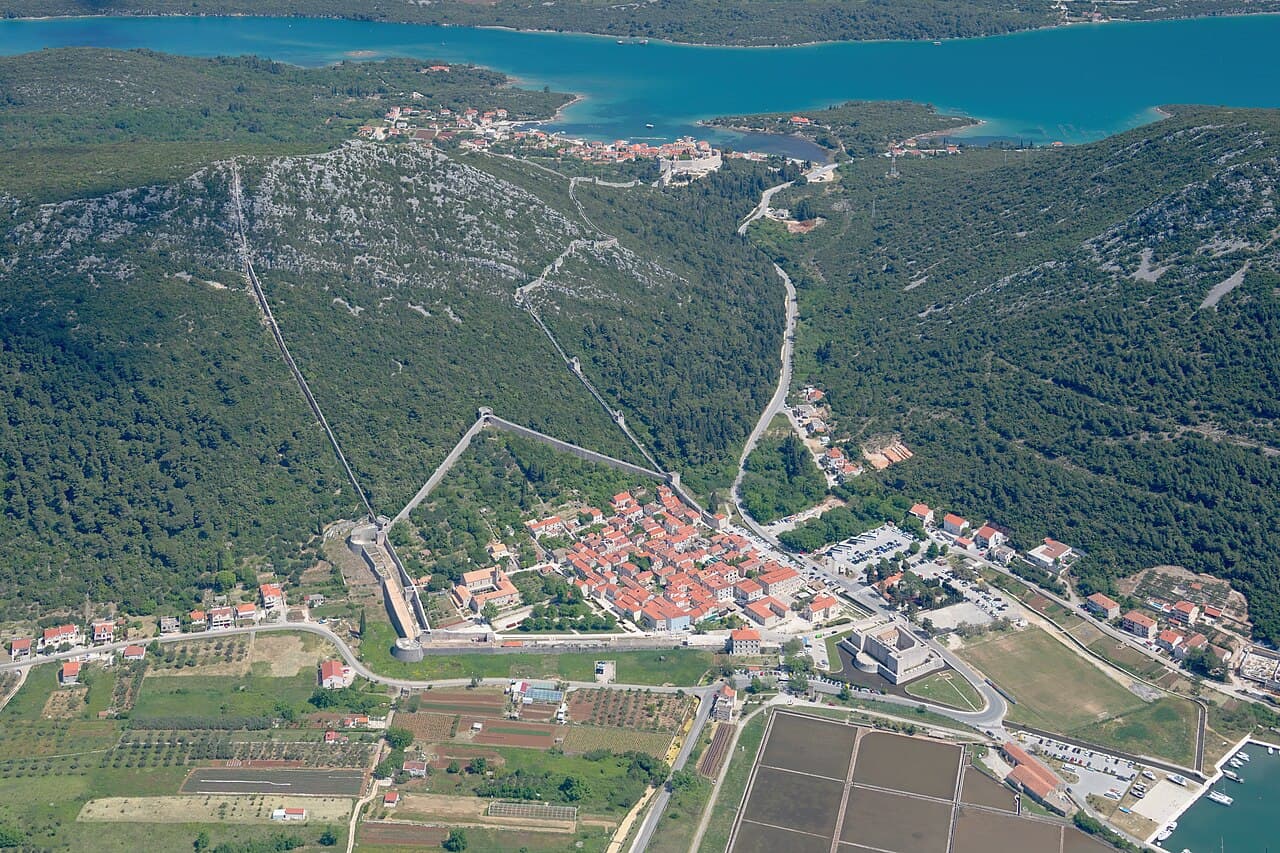
The Walls of Ston run about 5.5 km between Ston and Mali Ston, and are among the longest preserved fortification systems in Europe. The climb takes about 1–1.5 hours round trip, and the steep sections are the exposed stone steps in the heat. Go early in the morning in summer. The 15th-century salt pans next to Ston are still in operation, and visitors can buy salt in the shop there.
Mali Ston is known for oysters and mussels farmed in the bay. A basic oyster plate in a Mali Ston restaurant costs roughly €1.5–3 per oyster, and a dozen with wine is a standard lunch. Ston cake (Stonska torta) is the local dessert.
06Where to Stay
Mali Ston is quieter and has small waterfront guesthouses. Ston is more convenient for shops and the bus stop. Both are 5–10 km from Prapratno. Staying near Prapratno saves time on ferry days, and there is a campsite there. For a car-free trip, Ston's bus links to Dubrovnik are workable, but island logistics on Mljet without a car require a taxi or a rental bike.
07Insider Tips
- Book the first ferry. The early Prapratno sailing leaves the longest time on Mljet, and the queues are shorter.
- Eat oysters before 14:00. Mali Ston restaurants fill at lunchtime, especially at weekends in July and August.
- Combine the wall and the bay. Walking the walls to Mali Ston and taking a taxi back is simpler than a round trip.
- Skip Koločep or Lopud if you have only one island day from Ston. Mljet is a better use of time.
- Opinion: the Prapratno–Mljet route is the best island hop on this stretch of coast. The price is low, the crossing is short, and the island is far less crowded than the Elaphiti islands.
08Best Time to Go
June and September combine warm sea temperatures (around 22–25°C) with smaller crowds. July and August have the longest timetables but the heaviest ferry queues. From November to March, ferry frequency drops sharply and many island restaurants close, so check schedules before planning a winter trip.