01Best Time to Visit Grožnjan: The Verdict
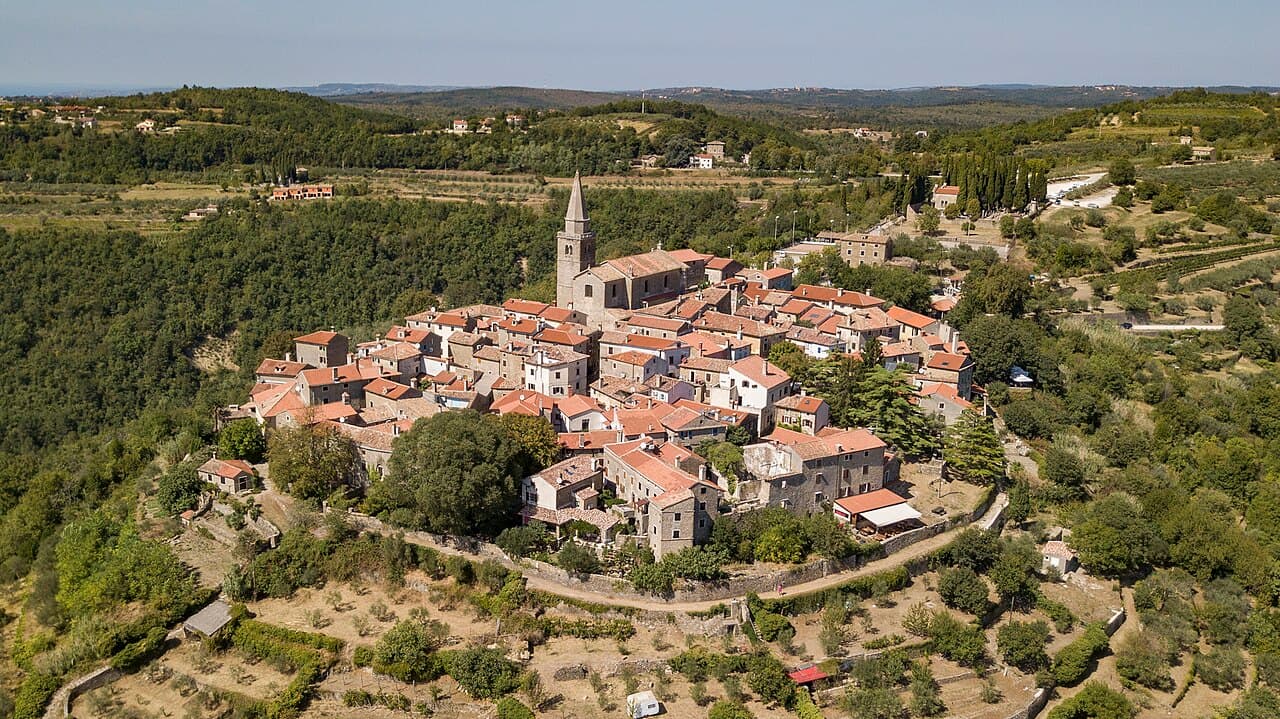
Grožnjan is a small hilltop town of about 290 m elevation with a car-free old centre. It is built around galleries, artist studios and music. It has few permanent residents, so how much is open and how much is happening matters more here than in a coastal resort. That makes the shoulder season the best choice.
The short ruling: late May to June and September to early October give the best mix of weather, crowds and price. July is best for jazz. August is the weakest value. Winter is for travellers who want silence and do not mind closed doors.
02Why Shoulder Season Wins
The town's character depends on its artists and musicians. The Jeunesses Musicales Croatia cultural centre, founded here in 1969, runs courses and workshops through the warm months. Music is heard from the streets from late spring onward. Galleries are open, terraces are in use, and the town does not have the tour-bus pressure of nearby Motovun.
- Weather
- warm enough for terrace dining and walking on the walls, without the peak summer heat.
- Crowds
- Grožnjan is small, so even moderate visitor numbers feel busy. Shoulder months keep the lanes comfortable.
- Price
- accommodation in inland Istria drops after the peak weeks, and parking and restaurant tables are easy to get.
September is the pick for anyone who wants to avoid crowds. It is still warm, visitors are fewer, and late summer and early autumn bring open-air art events, including the Ex Tempore art days.
03When July Is Worth It: Jazz is Back
The Jazz is Back BP festival is the main reason to accept peak conditions. The 2026 edition ran 13–26 July with 14 concert evenings. It was named the best European small (boutique) jazz festival by the European Jazz Federation in 2008. The festival has run since 1999 and is organised by the municipality and Jeunesses Musicales Croatia. The 2026 Summer Jazz School drew about 160 participants from more than 20 countries. Dates for 2027 are expected to follow the same mid-to-late July pattern, but check the official festival announcement before booking.
- Concerts are free, with no tickets or reservations.
- They usually start around 21:30 and run past 23:00.
- The stage is at Terasa Belvedere on the edge of the old town.
- Space is limited, so arrive by about 19:00 to eat and find a spot.
The trade-off is cost and numbers. Rooms in and around town are in highest demand, and many visitors come only for the evening. Staying in the town itself, not on the coast, avoids a late drive on narrow hill roads.
04Why August Is the Weakest Choice
August combines the highest coastal-region prices with the heat of the year's hottest weeks. The jazz festival has finished, and the town offers no extra programme to justify the premium. Day-trip traffic from Istrian beach resorts is at its peak. If August is the only option, visit in the early morning or after 18:00 and spend the middle of the day at the coast, which is about 20 minutes away by car.
05Winter and Early Spring: Quiet but Limited
Outside the main season Grožnjan is still pleasant, but few artists are present. Many galleries have limited hours and a few small restaurants and konobas close. Winter is quiet and local. It works for a short stop on an inland Istria road trip, such as pairing it with truffle and wine tastings. It does not work for travellers who come for galleries and music.
06Seasonal Comparison at a Glance
| Season | Best for | Main drawback |
|---|---|---|
| Late May–June | Balanced weather, open galleries, music courses | Fewer big events |
| Mid-July | Jazz is Back, evening concerts | Highest demand, limited space |
| August | Combining with coastal beaches | Heat, peak prices, day-trip traffic |
| September–early October | Lowest crowds with warm weather, art events | Some summer programmes ended |
| November–March | Silence, lowest prices | Many venues closed |
07Local Tips for Timing a Visit
- Skip the festival weekend if you dislike crowds. Weekday concerts in the 14-night run are easier to enjoy than the final-weekend All Stars night.
- Pair it with Motovun. The two towns are about 20 minutes apart. Visit Grožnjan in the morning and Motovun later in the day, since Motovun is the most visited of the inland towns.
- October extends the trip. Motovun hosts a Teran and truffle festival each October, which adds food and wine to a shoulder-season visit.
- Do not plan an evening-only visit outside July. Many small venues close early in the shoulder months, so eat in the afternoon or confirm opening times in advance.
- Allow half a day to one day. The old town is small, and one day is enough to see it.
Opinion: trying to see Grožnjan as a quick August stop on a beach holiday is the weakest plan. The heat, the traffic and the closed-for-siesta studios mean you see the town's least interesting side. Choose either the July jazz nights or a quiet June or September day.
08Practical Planning Notes
- The old town is car-free, so park at the edge and walk.
- Grožnjan is in northwest Istria, close to the Slovenian and Italian borders, and about 20 minutes from the sea at Novigrad.
- Book July accommodation as early as possible; for shoulder months, booking a few weeks ahead is normally enough.
- Bring comfortable shoes for the steep cobbled lanes.