01Is Nin Worth Visiting? The Short Verdict
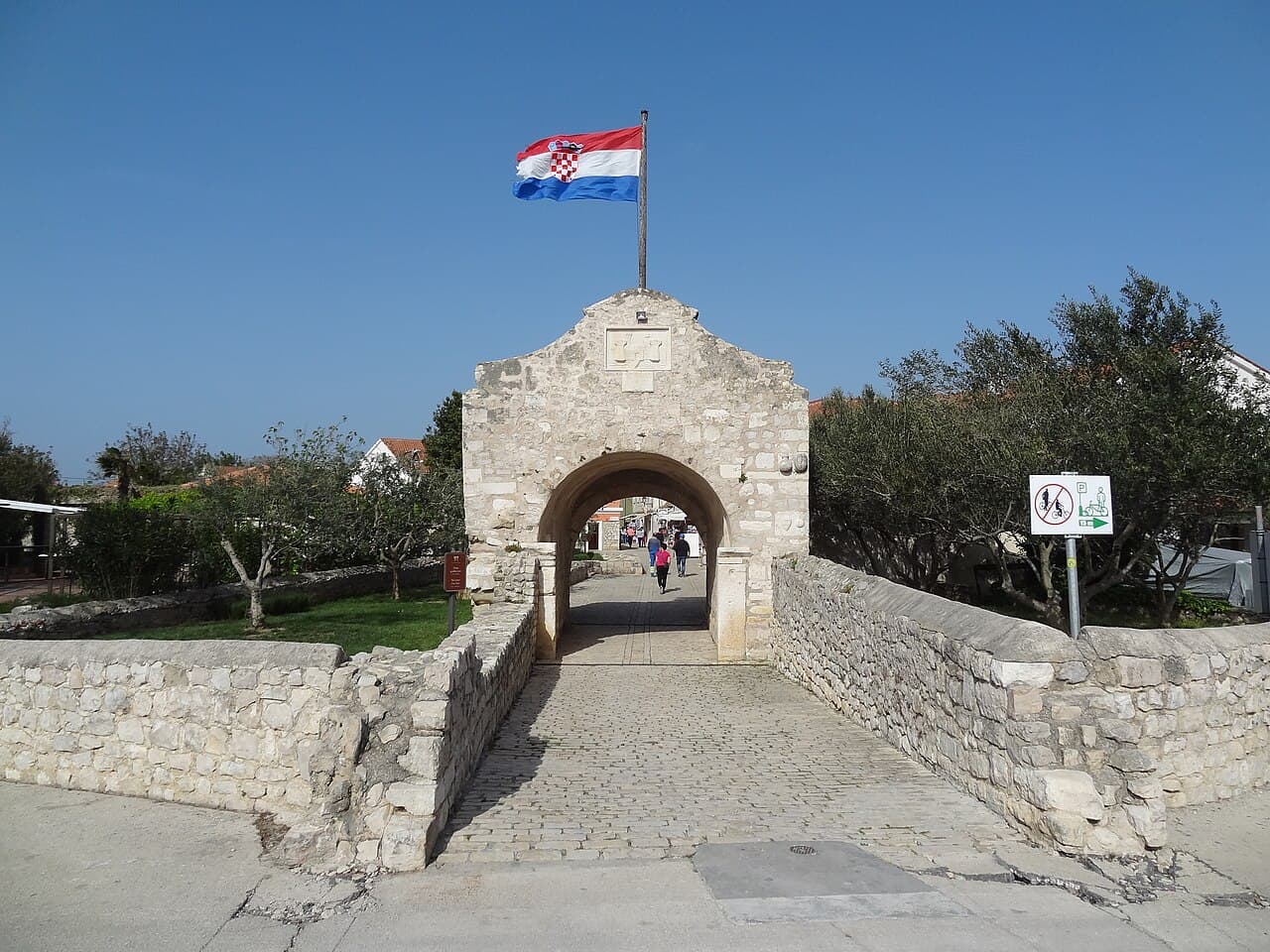
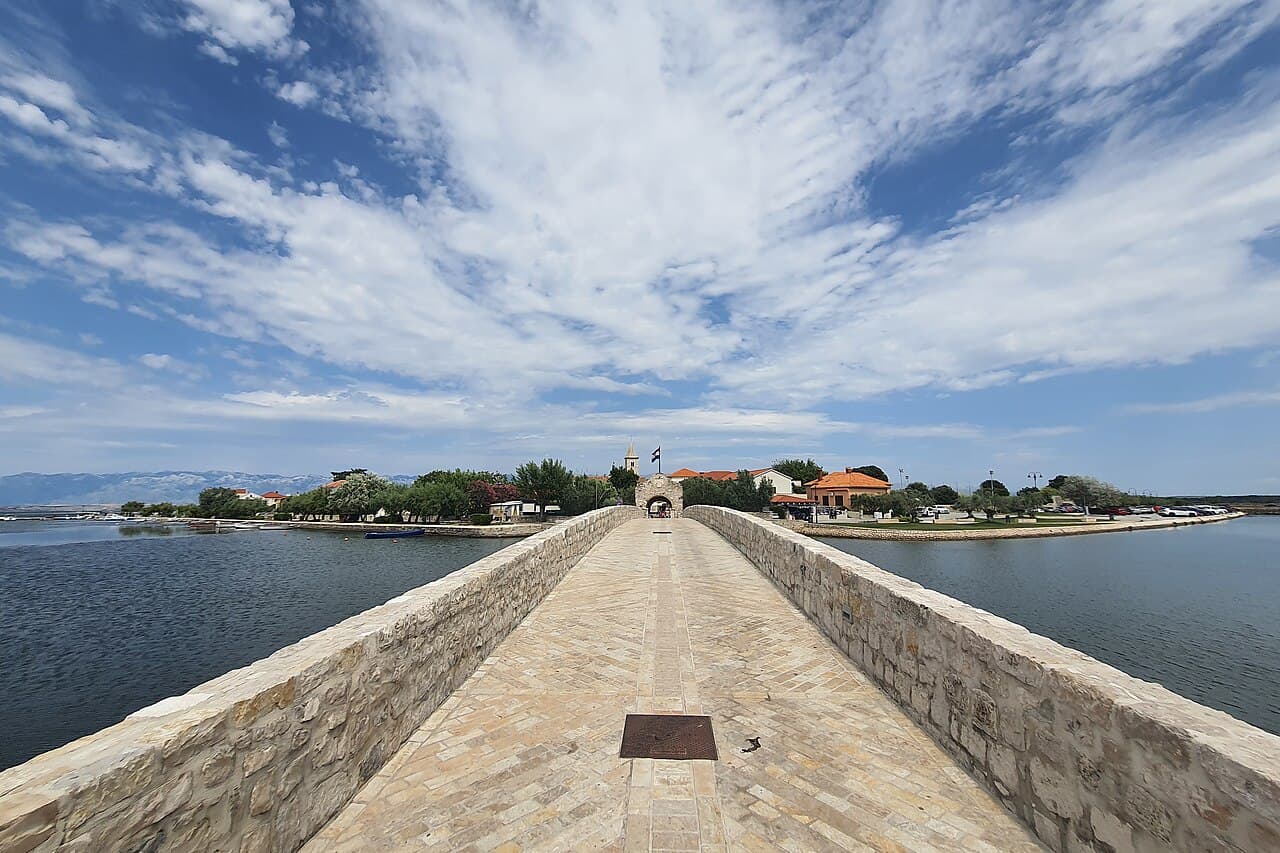
Nin is worth a visit for the beach, the salt landscape and the small old town. It is not worth a long stop for sights. The historic centre sits on a tiny islet linked to the mainland by two bridges, and it can be walked in 1-2 hours. Most visitors spend half a day to a full day.
02What Is Great About Nin
Queen's Beach and the Healing Mud
Queen's Beach is a sandy stretch about 3 km long, with shallow, warm water that suits small children. Medicinal mud (peloid) lies next to the beach, and applying it costs nothing. Few Croatian beaches offer sand instead of pebbles, which is the main reason families choose Nin over rocky Adriatic stops.
The Saltworks
Salt has been produced here for over 1,500 years, with sun, wind and sea doing the work instead of machines. The pans are also a bird habitat, with black-winged stilts, kentish plovers and little egrets among the species. Walking around the pans is the most distinctive thing to do in town.
A Compact, Historic Old Town
Nin is described as the oldest royal Croatian town. The Church of the Holy Cross, often called the smallest cathedral in the world, the Roman temple remains and the statue of Gregory of Nin fit into one easy loop. The town has restaurants and cafés but no nightclubs.
03The Downsides
The Salt Museum Is Small and Divisive
The museum is one room or a few small rooms with a film, old tools and a model. Many visitors finish in 20-30 minutes, and some call the €6 ticket too much for what it offers. Guided formats and audio tours cost more, and the longest tour costs several times the museum ticket. The museum alone is not the reason to visit. The pans and the guided walk are.
Crowds and Heat in Summer
Queen's Beach and the old town fill up in July and August, especially at midday and on weekends. Shade on the beach is limited, so the heat is strong. Parking near the beach and old town gets tight in peak season.
Limited Things to Do
The museum and the old town together will not fill more than a day. Nin works as a beach-and-culture stop, not a multi-day sightseeing base. The museum's own advantage is a good shop, but salt products there cost more than supermarket salt.
04Costs at a Glance
The town is cheap to enjoy. Beach access, mud, the old town and the walk beside the pans are free. The main paid items are the salt museum (€6 adult), a guided pan tour (price varies by format) and sunbed rental. Food in Nin's restaurants is generally cheaper than in Zadar's old town, although seaside restaurants charge more in summer.
05Best Time to Visit
Season matters here. Late summer (July-September) is when salt is harvested and the pans show white crystal layers. Visits in early June may show little salt in production. For the pans, go in the morning (08:00-10:30) to avoid the heat. For the beach, late May, June and September give warm water with fewer people.
06Local Tips
- Check the Solana Nin website for open days. Free open days with guided tours are published there, so check before going.
- The museum and shop open on weekdays from early morning (about 07:00-08:00) until evening and from 09:00 on weekends. Confirm hours before a visit.
- The salt pans are about 1 km from the old town, so a bike or short walk is enough, and the cycle path from Zadar is roughly 16 km, about an hour.
- A salt festival is held in summer, which adds crowds but also music and food; check the dates before booking.
- Buy flower of salt (fleur de sel) in the shop. It makes a better souvenir than the usual magnets.
07Who Should Go and Who Should Skip
Go if you travel with young children, like birdwatching, want sand instead of pebbles or want a quiet base near Zadar. Skip it if you want nightlife, big museums or a long list of sights. The museum ticket is overpriced for its size, so spend your money on the guided pan walk instead, or visit on a free open day.