01Myth 1: Orebić is just the place you catch the ferry to Korčula
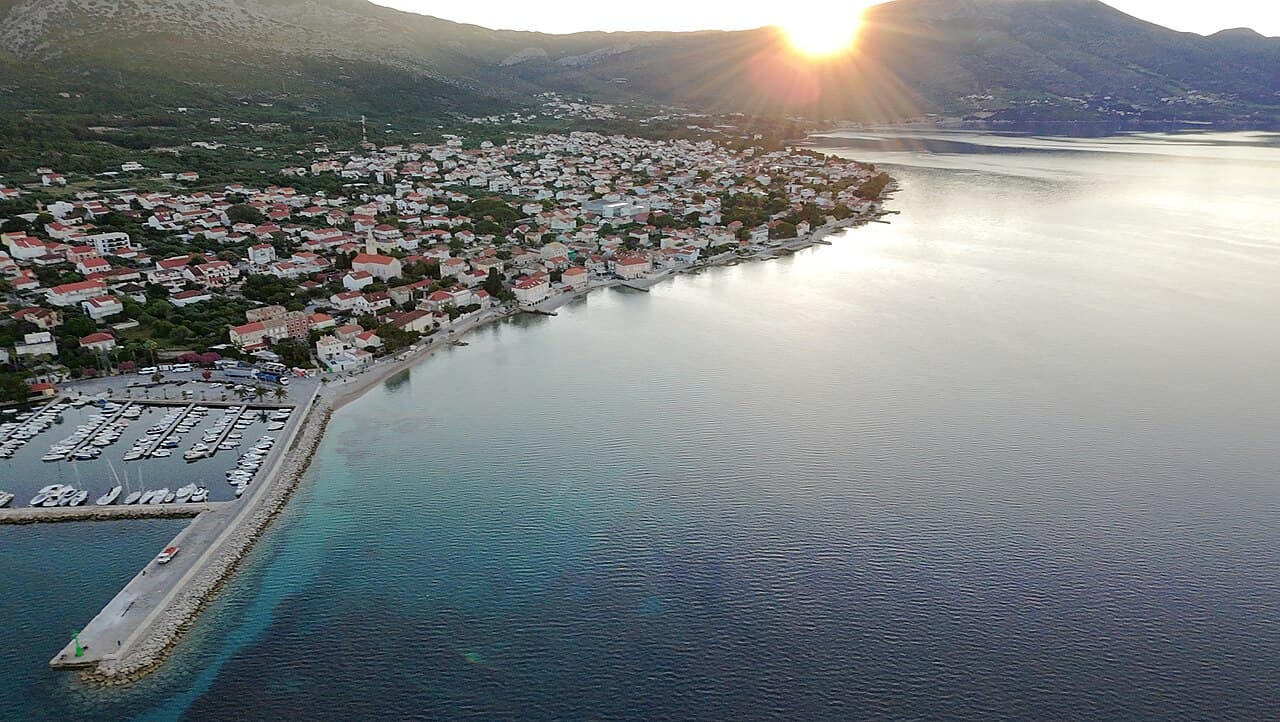
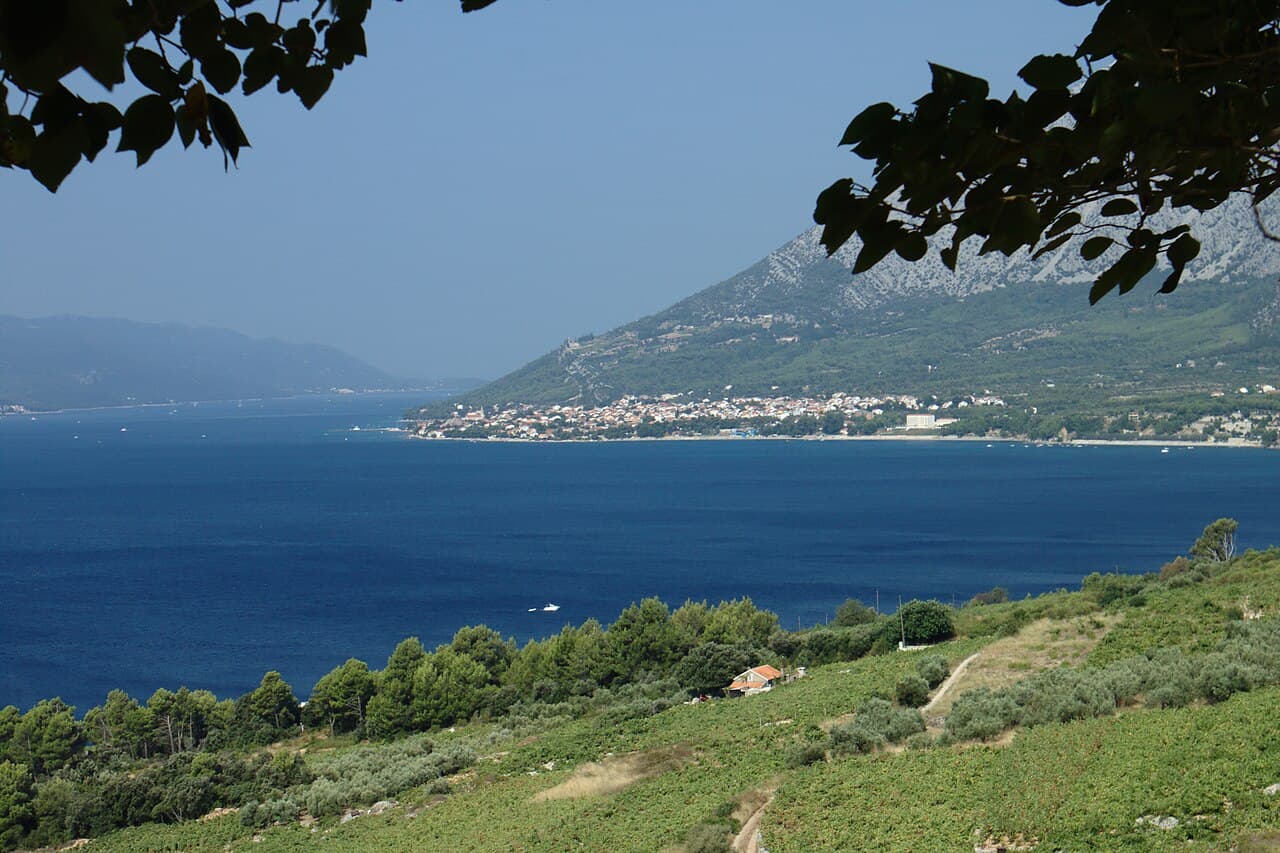
The reality: Orebić is a full resort town on the southern coast of the Pelješac peninsula, at the foot of Mount Sveti Ilija. It has a long seafront promenade, a maritime museum, a sandy beach, a Franciscan monastery on a ridge and a windsurfing village (Viganj) 10 km west. Korčula's old town is the more famous attraction, but Orebić is where the views of it come from.
Better alternative: Base yourself in Orebić for three or four nights. Spend one day on Korčula, and use the rest for the beach, the monastery, the mountain and the wine road. Accommodation here is generally cheaper than inside Korčula's walled town, and the evenings are quieter.
02Myth 2: You must bring your car on the ferry
The reality: The Jadrolinija line 634 car ferry runs from Orebić to Dominče on Korčula in about 20 minutes. A foot passenger ticket costs €2.50 in low season and €4.40 in high season (29 May to 27 September 2026). A standard car costs €10.40 or €16.20 one way, and children aged 3–12 pay €1.20. Crossings run roughly every 1 to 1.5 hours during the day, with early morning and late evening departures. In July and August, car queues at the Orebić terminal can add an hour or more.
Better alternative: Walk on. Dominče is a few kilometres from Korčula town, and local buses, taxis and passenger boats cover the gap. Check the current timetable on the Jadrolinija website before the last-boat evening, because winter schedules are thinner than summer ones.
If you drive from the mainland instead, the Pelješac Bridge now bypasses Neum, and the road from Dubrovnik to Orebić is a drive of around two hours. From the Split direction, the Ploče–Trpanj ferry (line 633) is an alternative: an adult ticket is €4.50 in low season and €6.70 in high season, and a standard car is €18.00 or €25.20.
03Myth 3: Sveti Ilija is an easy walk
The reality: Sveti Ilija is 961 m, the highest point on Pelješac, and it rises almost straight from the sea. From Orebić the full ascent with a return takes more than five hours. Other trailheads (Nakovanj, Kučište, Ruskovići) are listed at about 5 to 7.5 hours for the round trip. The upper slopes have little shade, and the mountain is known locally as Snake Hill because of its horned viper population. A mountain lodge at about 800 m can offer refreshments, but it should not be treated as a guaranteed stop.
Better alternative: For a first visit, walk to the Franciscan Monastery of Our Lady of the Angels. The path starts near Hotel Bellevue at the western end of town and takes about 20 minutes uphill. The monastery dates from the late 15th century, holds a museum, and has an excellent view over the Pelješac Channel to Korčula. A signed path continues uphill from there for anyone who wants a longer walk without committing to the summit.
If you do go for the peak, start at sunrise in summer, carry at least 2 litres of water per person, and wear closed hiking shoes. Sandals on this mountain are a bad idea.
Insider perspective: The cemetery of captains and sailors beside the monastery is easy to skip, but it explains the town. Orebić grew rich on seafaring families, and the captain's houses along the seafront date from that period.
04Myth 4: Croatian beaches are all pebbles and rock slabs
The reality: Trstenica, close to the town centre on the Dubrovnik side, is a sandy beach with shade, rentals and a few bars. It is one of the few real sand beaches on this stretch of the Dalmatian coast, and the shallow entry suits small children. One section is used by naturists.
Viganj is a different kind of beach. The Pelješac Channel acts as a wind tunnel, and the village is one of Croatia's main windsurfing and kitesurfing centres. The afternoon maestral wind is strongest in summer. It is excellent for sailing, and poor for a quiet read on the sand.
Better alternative: Match the beach to the day. Swim at Trstenica in the morning. Go to Viganj after midday if you want to watch or try kitesurfing. The beach bars there stay lively into the evening, and live music runs at the better-known ones.
This is the opinionated part: Do not book a beach-only week at Viganj unless you plan to use the wind. On a strong maestral day, the sand and a book are a losing combination, and Trstenica is a 15-minute drive away.
05Myth 5: Pelješac wine means a bus tour from Dubrovnik
The reality: Pelješac is Croatia's best-known red wine region, and Orebić sits at its western end. Plavac mali is the main grape. The steep Dingač and Postup vineyards are on the south-facing slopes above the sea, on the road toward Potomje and Trstenik, a short drive east of Orebić. Day tours from Dubrovnik take around two hours each way, so most of the day is spent on a coach.
Better alternative: Drive or take a taxi from Orebić and visit one or two family cellars. Most have a short tasting for a modest fee, and many sell bottles directly. Book ahead in July and August, and keep a sober driver, since the roads are narrow and winding. Oysters from the nearby Mali Ston bay are a common pairing, though that stretch is a longer day trip toward Ston.
Insider perspective: September is the best month for a first visit. The sea is still warm, ferry queues are shorter, the high-season ferry fares end on 27 September, and the harvest begins in the vineyards.
06What a First Visit to Orebić Needs
Three things matter most. First, treat Orebić as a base and not a transit point: three nights is the minimum to use the beach, the monastery and one day on Korčula. Second, travel as a foot passenger across the channel, which costs a few euros and removes the ferry queue problem. Third, decide early which version of Orebić you want: sand and calm at Trstenica, wind sports at Viganj, or hiking and wine on the slopes. Bring sun protection, water and sturdy shoes, and book summer accommodation well ahead.