012026 Dates and Core Event Information
Zagreb Advent 2026 operates from November 28, 2026, to January 7, 2027. Unlike many European winter markets that shut down immediately after Christmas Day, Zagreb extends its season well into the first week of January. The event functions as a city-wide festival rather than a single concentrated market. Visitors walk a continuous loop through the city center, moving between roughly 25 distinct zones, squares, and parks.
The weather in Zagreb during December averages between 1°C and 5°C, with frequent overcast days and occasional light snow. The market stalls generally open around 10:00 AM and close between 22:00 and 23:00, with extended hours on Fridays and Saturdays.
02Main Market Locations
The Zagreb Advent layout is split primarily between the Donji Grad (Lower Town) and Gornji Grad (Upper Town). The locations are designed to be explored on foot.
Ban Jelačić Square (Trg bana Josipa Jelačića)
This is the central transport hub and the primary entry point for the event. The square features the largest Christmas tree in the city, a central stage for live music performances, and dozens of food and drink stalls. Trams 6, 11, 12, 13, 14, and 17 intersect here, making it the busiest location throughout the day.
Zrinjevac Park
Located a two-minute walk south of the main square, Zrinjevac Park focuses on traditional local crafts and classic winter food. The 220 plane trees lining the park are wrapped in white lights, and the 1891 music pavilion hosts classical and jazz performances. If you visit only one location, make it Zrinjevac Park; the commercialized stalls at European Square pale in comparison to the historic atmosphere of this 19th-century pavilion.
King Tomislav Square (Ice Park)
Continuing south from Zrinjevac, King Tomislav Square houses the Ledeni Park (Ice Park). The layout features a massive outdoor ice skating rink with a figure-eight track that circles the central fountain, set against the backdrop of the Art Pavilion. Skating sessions cost €3.50 between 10:00 and 15:30, rising to €5.00 for evening sessions.
European Square (Europski Trg)
Situated just east of Ban Jelačić Square, this pedestrian zone caters to a younger crowd. The programming here leans heavily toward electronic music, DJ sets, and modern street food. It is highly active in the late evenings.
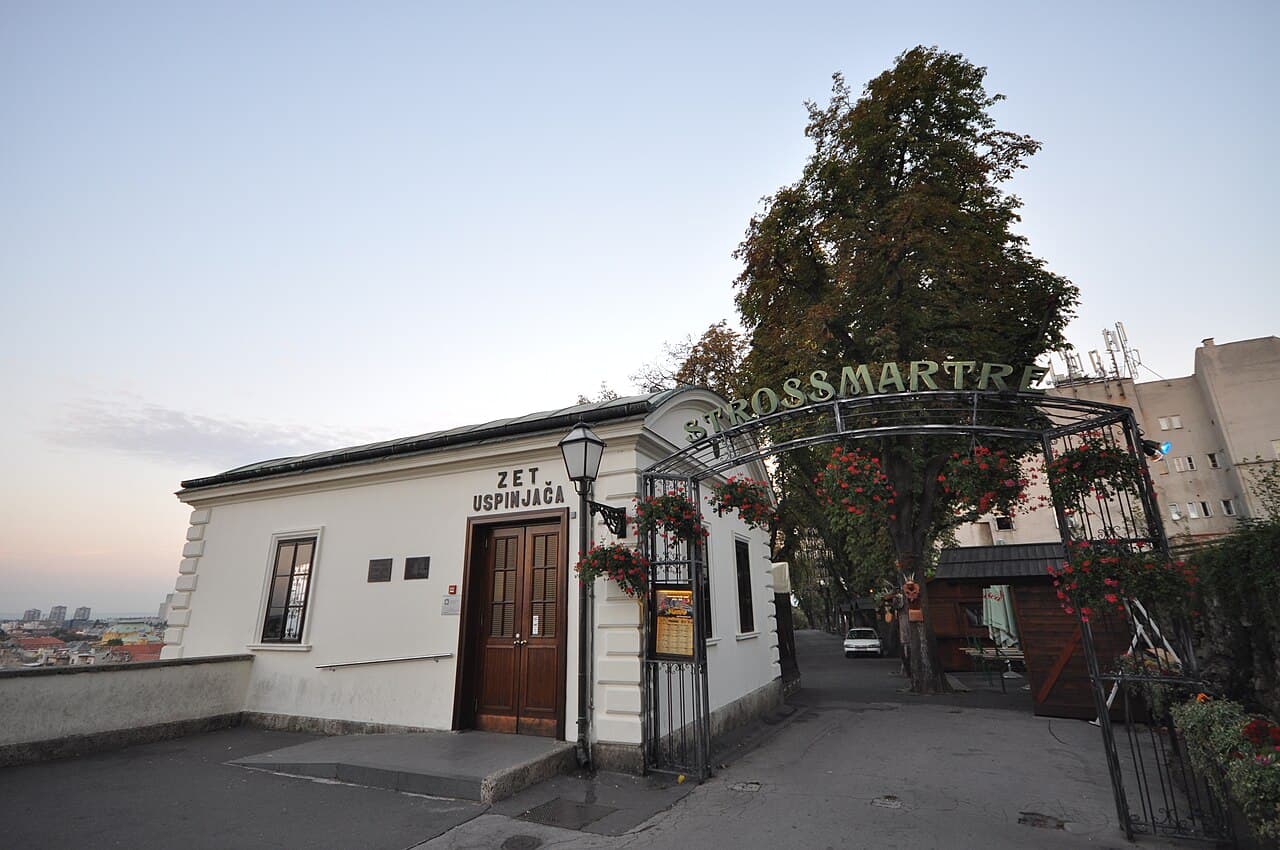
Strossmayer Promenade and Upper Town
Accessible via a short walk up Radićeva Street or a 66-cent ride on the Zagreb Funicular, the Upper Town offers a quieter environment. The Strossmayer Promenade provides panoramic views over the Lower Town roofs. The stalls here focus heavily on mulled wine and craft beers, accompanied by small acoustic music setups.
Grič Tunnel and Ribnjak Park
The Grič Tunnel, a repurposed World War II shelter beneath the Upper Town, hosts elaborate light and art installations. Entrances are located on Mesnička Street and Radićeva Street. Nearby, Ribnjak Park often features the Moon Garden installation, a quiet outdoor light display aimed at photography.
03What to Eat and Drink: Typical 2026 Prices
The food at Zagreb Advent highlights Croatian winter cuisine. While prices have increased over recent years, they remain highly structured. Stalls use a reusable cup system for hot drinks, requiring a €4.00 refundable deposit.
Hot Drinks
- Kuhano vino (Mulled Wine)
- Available in red and white varieties, usually spiced with cinnamon, cloves, and orange. Prices range from €3.50 to €4.50 for a 0.2L serving.
- Kuhani džin (Mulled Gin)
- Mixed with hot apple juice and spices. Prices average €4.50 to €5.50.
- Rakija
- Local fruit brandy, served in small shots. Popular flavors include plum (šljivovica), honey (medica), and cherry (višnjevac). Expect to pay €3.00 to €4.00 per shot.
Food and Sweets
- Kobasice (Sausages)
- Standard hot dogs start around €4.00. Traditional sausages like Debrecinka, Kranjska, or wild boar cost between €6.00 and €9.00. They are served in thick buns with mustard and cabbage.
- Fritule
- Small, deep-fried dough balls dusted with powdered sugar and topped with chocolate sauce or caramel. A standard portion costs €5.00 to €7.00.
- Sarma
- Cabbage rolls stuffed with minced meat and rice, served with mashed potatoes. This hearty meal costs between €9.00 and €12.00.
- Premium Sweets
- Trendy items, such as the "Dubai germknedle" (steamed yeast dumplings with pistachio and chocolate), can cost up to €15.00 at specialty stalls.
04Best Days and Times to Avoid Crowds
The most crowded periods are Friday evenings, Saturdays from noon until midnight, and Sunday afternoons. To avoid heavy foot traffic and long lines for food, plan to visit the main squares on a Tuesday, Wednesday, or Thursday between 14:00 and 16:00. The two weeks leading up to Christmas Day see the highest volume of visitors. The first week of January is significantly quieter, though all stalls remain fully operational.
05Where to Park During Advent
Street parking in Zagreb's central Zone 1 (Red Zone) is strictly limited to a two-hour maximum and is heavily monitored. During Advent, finding an empty street spot in the center is highly unlikely. Visitors should use the city's public garages operated by ZagrebParking.
The three most central garages are Tuškanac, Langov trg, and Petrinjska.
- Tuškanac Garage (Tuškanac bb)
- Located a 5-minute walk from the main square. It offers 465 spaces.
- Langov trg (Trg Josipa Langa 13)
- Located a 5-minute walk from European Square. It offers 305 spaces.
- Petrinjska (Petrinjska ulica 59)
- Located a 7-minute walk south of the main square.
The pricing structure for these central garages is uniform:
- Daytime (08:00 - 21:00)
- €1.60 per hour
- Nighttime (21:00 - 08:00)
- €0.80 per hour
- 24-Hour Ticket
- €13.30
- Weekly Ticket
- €47.00
Visitors entering the garage who wish to buy a 24-hour or weekly ticket must request it from the attendant within 10 minutes of pulling the entry ticket.
06Getting There: Routes from Major European Cities
Croatia is part of the Schengen zone, meaning there are no border checkpoints when driving from Slovenia or Hungary. Croatia uses a distance-based toll system rather than a vignette, though a barrier-free electronic system (Crolibertas) is slated for implementation by 2027. Until then, you take a ticket upon entering the highway and pay by card or cash at the exit booth.
From Budapest, Hungary
- By Car
- The drive covers 340 kilometers and takes 3.5 hours. Take the M7 highway south past Lake Balaton to the Letenye/Goričan border. You need a Hungarian e-vignette. Once in Croatia, take the A4 highway to Zagreb. The Croatian toll is €5.80.
- By Train
- Direct trains depart from Budapest Kelenföld or Deli stations to Zagreb Glavni Kolodvor. The journey takes 6 hours.
From Vienna, Austria
- By Car
- The drive covers 370 kilometers and takes 4 hours. Take the A2 Süd Autobahn to Graz, then the A9 Phyrn Autobahn to the Slovenian border (Spielfeld). You need an Austrian vignette and a Slovenian vignette (€16 for a weekly pass). Cross into Croatia at Macelj and take the A2 highway to Zagreb. The Croatian toll is €6.40.
- By Train
- Direct trains run from Wien Hauptbahnhof to Zagreb, taking approximately 6.5 hours.
From Graz, Austria
- By Car
- The drive is 180 kilometers and takes 2 hours. Follow the A9 directly south to the Macelj border. Requires Austrian and Slovenian vignettes, plus the €6.40 Croatian A2 toll.
- By Train
- Direct service from Graz Hauptbahnhof takes 4 hours.
From Ljubljana, Slovenia
- By Car
- The drive is 140 kilometers and takes 1.5 hours. Take the A2 highway east to the Obrežje/Bregana border. You need a Slovenian vignette. Once in Croatia, the A3 highway takes you straight into the Zagreb bypass.
- By Train
- Trains run frequently between the two capitals and take 2.5 hours.
From Munich, Germany
- By Car
- The drive covers 550 kilometers and takes roughly 6 hours. Take the A8 to Salzburg, then the A10 Tauern Autobahn (which carries an extra €13.50 toll). Pass through the Karawanken tunnel (€7.80) into Slovenia, requiring a Slovenian vignette, then continue past Ljubljana to the Bregana border.
- By Train
- There is a direct EuroNight train, or daytime routes requiring a transfer in Villach or Ljubljana, taking 8.5 hours total.
07Where to Stay in Zagreb
Choosing the right neighborhood in Zagreb dictates how much you will rely on the tram system.
Donji Grad (Lower Town)
This is the optimal area for visitors who want to step out of their accommodation directly into the markets. Staying between Ban Jelačić Square and the Main Train Station (Glavni Kolodvor) ensures you are within a 10-minute walk of 90% of the Advent locations. Hotel prices here peak in December, and parking requires a dedicated garage.
Gornji Grad (Upper Town)
Located on the hill above the main square, the Upper Town is quieter and highly historic. It is characterized by cobblestone streets and gas lamps. It provides a highly atmospheric stay, but reaching the Lower Town requires walking down steep stairs or taking the funicular. Do not stay here if you are traveling with a car, as parking is heavily restricted to residents.
Novi Zagreb (New Town)
Located south of the Sava River, this area features large modern apartment blocks and hotels with ample free or cheap surface parking. It completely lacks historical architecture, but you can reach the Advent markets by taking tram 6 directly to Ban Jelačić Square in 15 to 20 minutes. It is the best option for budget-conscious travelers with vehicles.