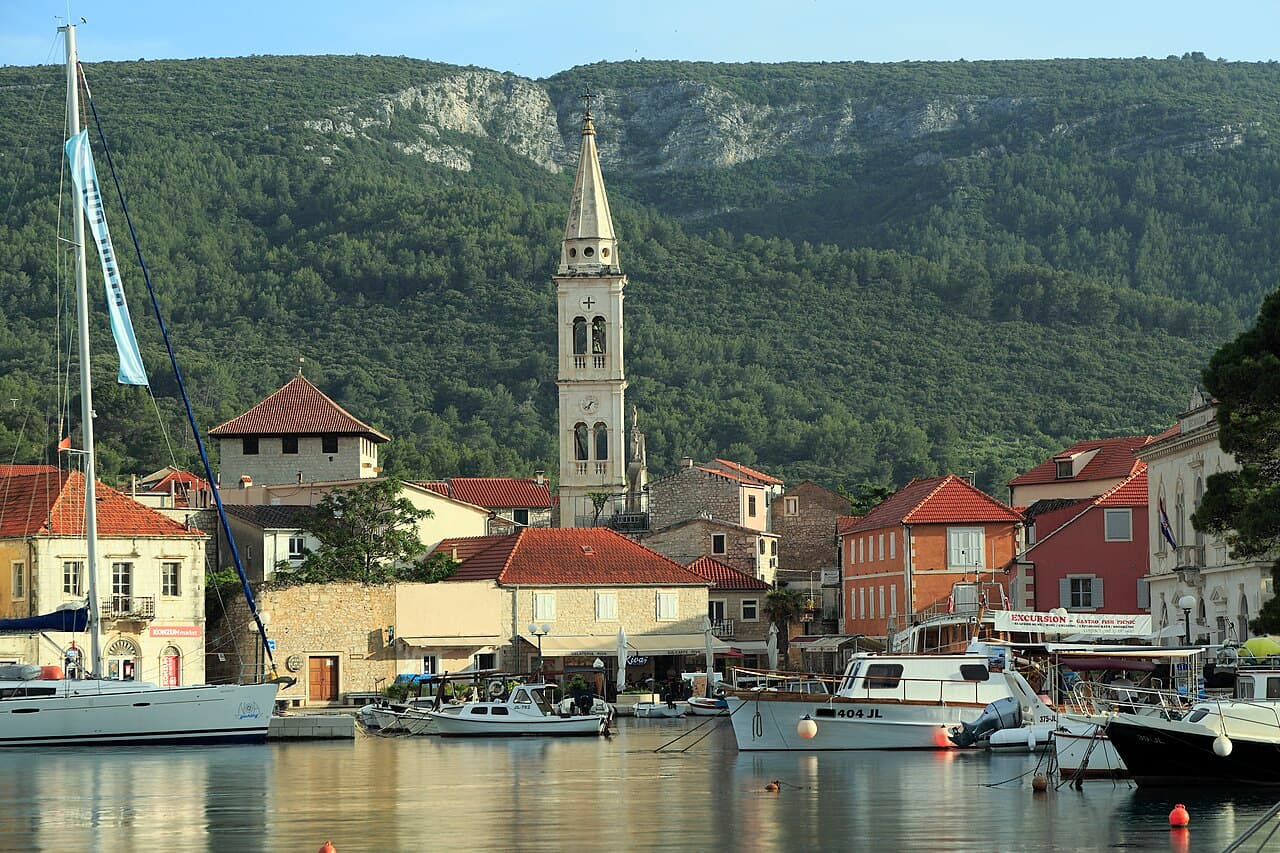
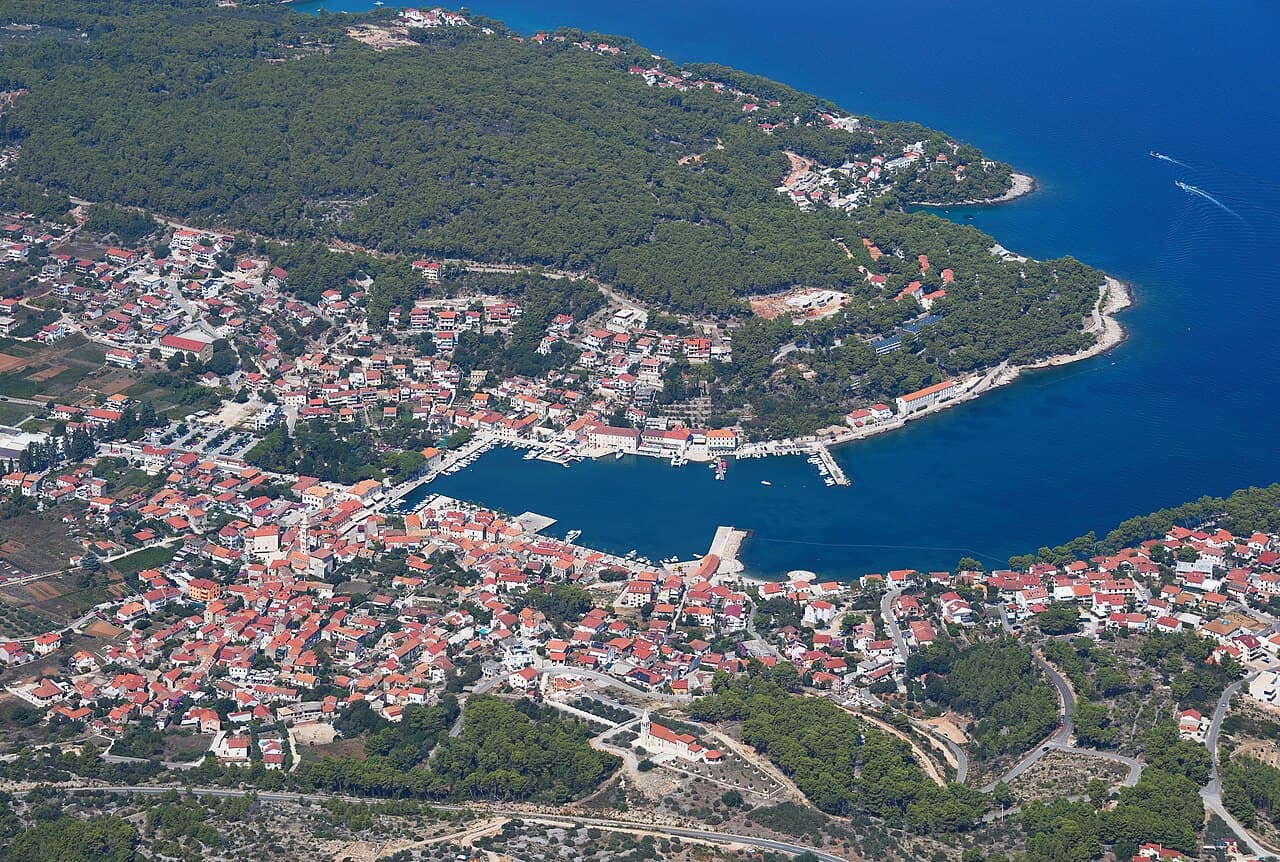
01Pitve: The Hill Hamlet Above Jelsa
Pitve sits 168 m above sea level in the hills above Jelsa. It has about 90 residents. Jelsa began in the 14th century as the fishing port of Pitve, and the hamlet is one of the oldest settlements on the island. It was built as a lookout over the fields and villages below.
Between Upper and Lower Pitve stand the parish church of St James (Sv. Jakov), a cemetery, and the old school, which is now a wine cooperative. There is no sightseeing list here. The appeal is stone lanes, terraced vineyards and silence by mid-afternoon.
Local tip: Go in the early evening. The light is better, the heat has dropped, and the lanes are empty of day-trip groups.
02Vrisnik: Konoba Lunch in a Working Village
Vrisnik is a short drive from Jelsa and works as a lunch stop. Its family-run konobas serve homemade island food such as peka-style dishes and local wine. Book ahead in July and August, because tables are few.
03The Pitve Tunnel and Zavala: The Quiet South Coast
The road from Jelsa climbs through Pitve and Vrisnik, then enters a rough-hewn tunnel 1,500 m long. It exits on the south side of Hvar. The first view takes in the islet of Šćedro, Korčula behind it, and the small island of Sušac further out.
Zavala is an offshoot of Pitve. Its older upper part has restored stone houses. Newer houses by the sea are mostly rented to tourists in summer. Pebble beaches run along the coast toward Ivan Dolac and Sveta Nedjelja. The water is clear and the setting is steep vineyards. Zavala also has a restaurant known for Pitovska cake, a local pastry.
Practical note: The tunnel is narrow. Drive slowly, use headlights, and expect to give way to oncoming cars.
04Vratnik–Zavala Trail Over St. Anthony Hill
An old serpentine path climbs from the Vratnik gorge to Zavala over St. Anthony hill (550 m). It is the main walking route in the area and suits beginners and experienced hikers. Start early and carry at least 1.5 litres of water per person, as there is little shade. The Pitve side of the tunnel is also a starting point for local climbing routes.
05Lavender at the Edge of Town
Hvar was once a major lavender producer. The first bush was planted in 1928, and by 1947 about 30 hectares were cultivated. Few fields remain. One 1-hectare plot lies at the entrance to Jelsa. Late June to early July is the usual bloom period.
06Za Križen: The Night Procession
On the night from Maundy Thursday to Good Friday, the Za Križen procession links six settlements: Jelsa, Pitve, Vrisnik, Svirče, Vrbanj and Vrboska. It has run without interruption for five centuries and is protected by UNESCO. Visitors can watch respectfully, but it is a religious event, not a show. Dress modestly and do not use flash.
07What to Skip
Skip the organised speedboat and "hidden gems" boat tours that depart from Makarska or Omiš and are sold under Jelsa listings. They have nothing to do with Jelsa's inland villages, and a rental car or scooter covers the real hidden spots at lower cost.
08How to Get Around
A car or scooter is the practical option. Pitve, Vrisnik and the tunnel are all reachable in 10 to 20 minutes from Jelsa. Buses to the hill villages are sparse, so check the current timetable at the Jelsa bus station before relying on them. Fill the tank in Jelsa before heading south.